December 09, 2025
In Today's world, 74% of high-end homebuyers admit they cannot fully understand an architectural concept unless they see it in photorealistic 3D. Not sketches. Not AI-tweaked images. Photorealistic renderings.
Because luxury isn’t something people merely look at — it’s something they feel. It’s the quiet glow on white oak at sunset. The rhythm of beams across a high ceiling. The way a driveway unfolds and frames the architecture like a cinematic reveal.
This is the emotional precision Eric needed when he came to us — because the home he was designing wasn’t just another residence. It was a statement, an experience, and a promise wrapped into one architectural vision. And visions like that demand clarity.
Some homes are built to be lived in. Others are built to be remembered.
Eric’s project belonged entirely to the latter category — a luxury residence defined by a dramatic tree-lined driveway, sculptural rooflines, modern awnings, refined textures, and a resort-inspired backyard that carried as much personality as the house itself.
But turning this vision into something the client could truly grasp, trust, and emotionally connect with required more than reference images dragged from Pinterest or AI-generated mock-ups that looked almost right, but not quite.
Eric needed precision. He needed accuracy.
He needed luxury—rendered with intention and depth.
“I need very good images for this project,” he told us.
Simple words, but layered with urgency and expectation — because the client’s final approval depended on visuals that didn’t just show the home, but elevated it.
With only 2D CAD drawings, a curated material direction, and a set of imperfect AI reference images as starting points, our team stepped in to build a photorealistic narrative from the ground up. A narrative rooted in craftsmanship, proportion, emotion, and architectural truth.

The first step was understanding the heart of the project — the emotional and architectural DNA of the home. Every material Eric selected had intention behind it:
Each detail added another layer of meaning. Our task? To bring all of these layers together into images that felt cohesive, truthful, and visually powerful. So we did what we always do: We began with the story the client wanted to tell — then built the visuals to match.
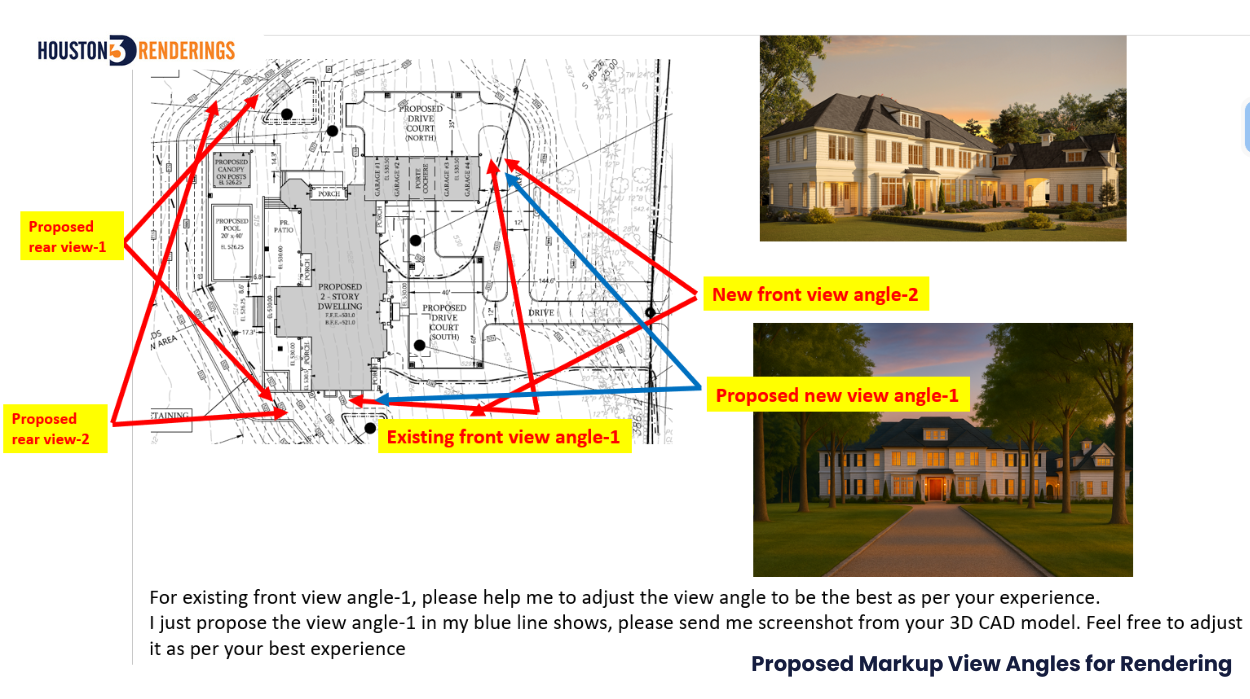
Before a single rendering began, we reconstructed the home’s visual identity through three core lenses:
Every material chosen for this residence carries emotional weight. Stone grounds the home with permanence. Slate adds refinement. Cedar shake softens the architecture with a residential warmth. Bluestone and Belgian blocks elevate the experience the moment someone enters the driveway. Luxury isn’t random. It is curated — and rendered.
The client’s AI-modified references bent proportions, flattened depth, and misrepresented light behavior. We rebalanced every angle to reflect the true elegance:
A home can be technically correct and still feel emotionally empty.
So we shaped the mood intentionally:
Mood is the invisible architecture people remember most.
Every part of the home was chosen to feel both residential and resort-like, balancing modern minimalism with warm natural materials.
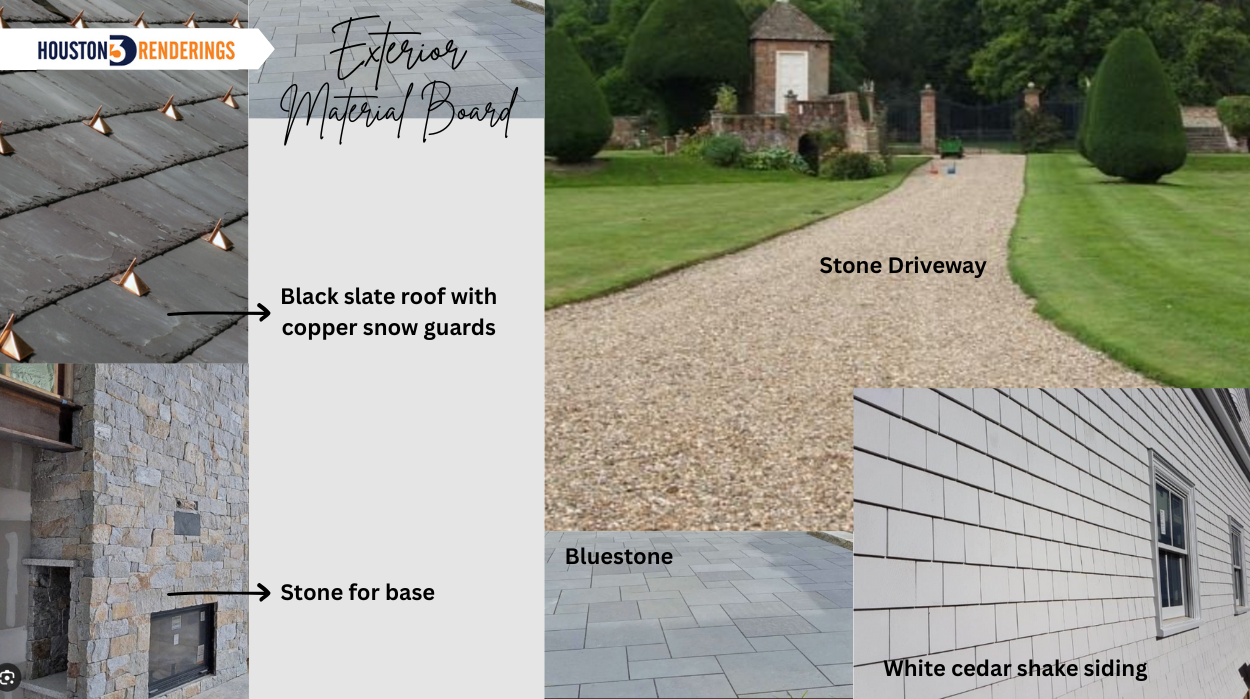
This is the first impression. The moment the architecture becomes an experience.
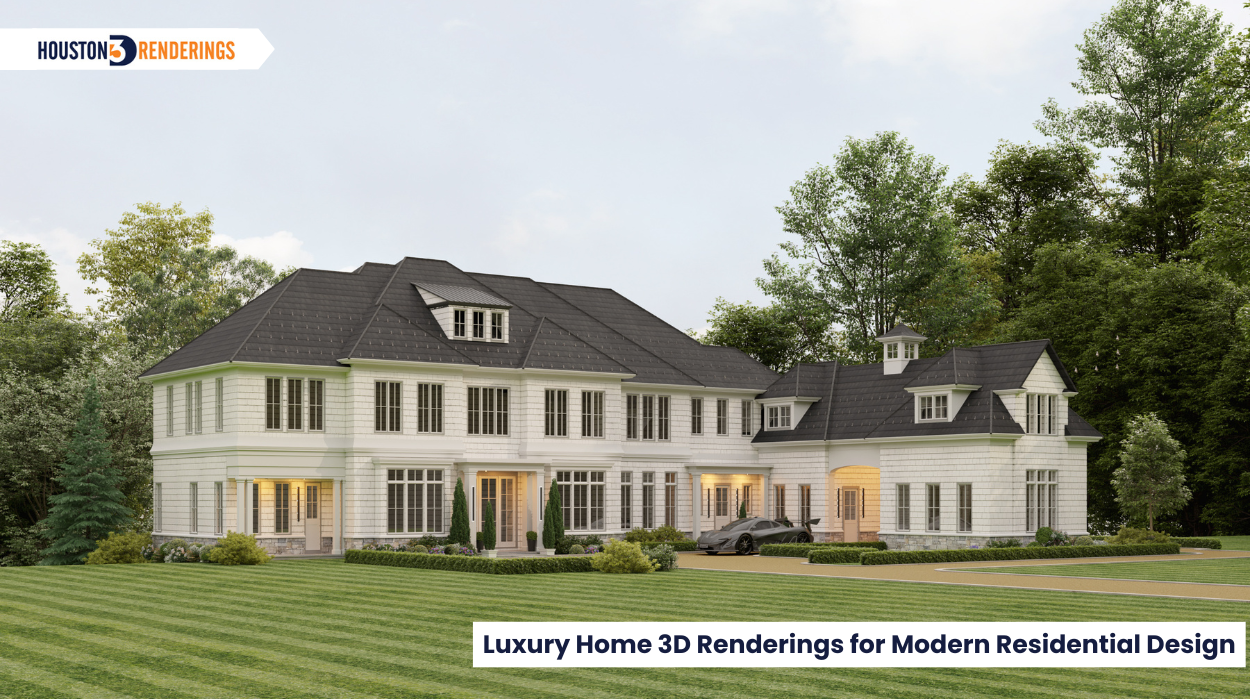
The long tree-lined driveway frames the home like a slow reveal — the kind of visual that speaks of both luxury and intention. Flat awnings maintain crisp horizontal lines. Grey trims soften the brightness of the cedar shake. The home feels calm, welcoming, and confidently modern.
We corrected every inaccuracy from the AI reference, ensuring the proportions matched the sophistication the client expected.
The result is a façade that doesn’t simply show luxury — it communicates it.
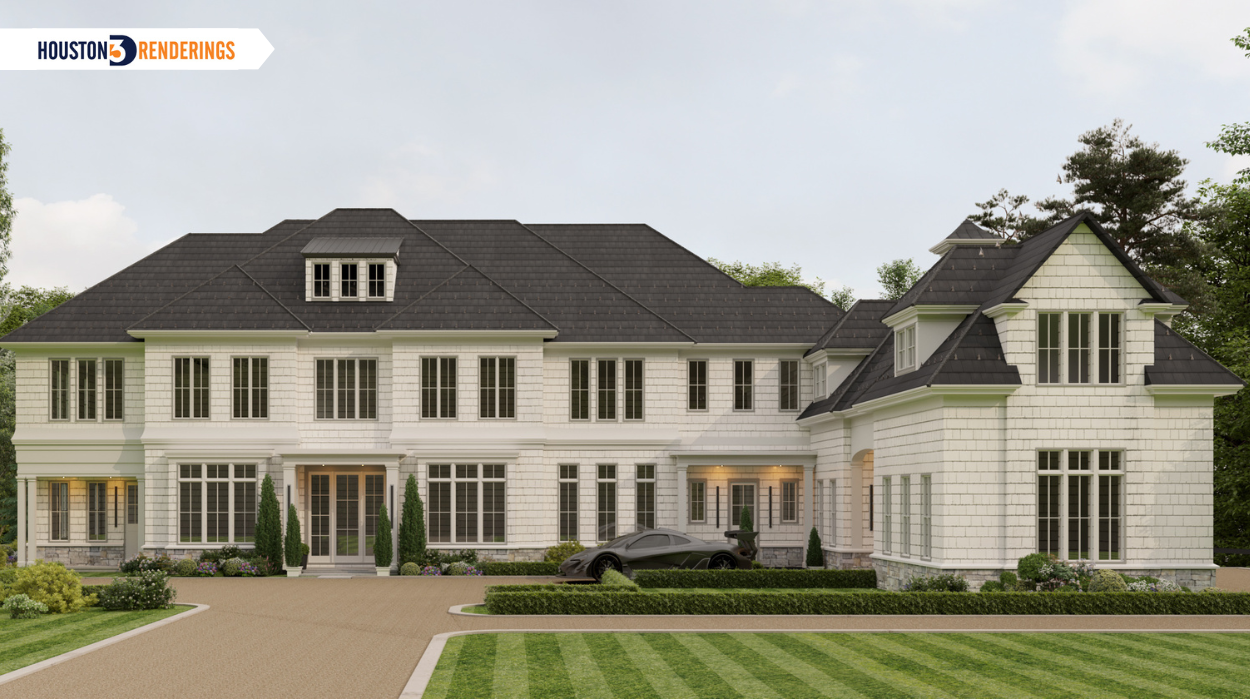
Some renderings are meant to be seen. This one was meant to be felt.
By placing a luxury vehicle in the perspective and emphasizing the Belgian block edge, we created a sense of scale, depth, and lifestyle. The driveway becomes part of the architecture, guiding the eye and grounding the home within its environment.
Warm, directional lighting highlights the texture of the materials — the shake, the trim, the stone, the awnings — all composed to build a narrative of quiet sophistication.
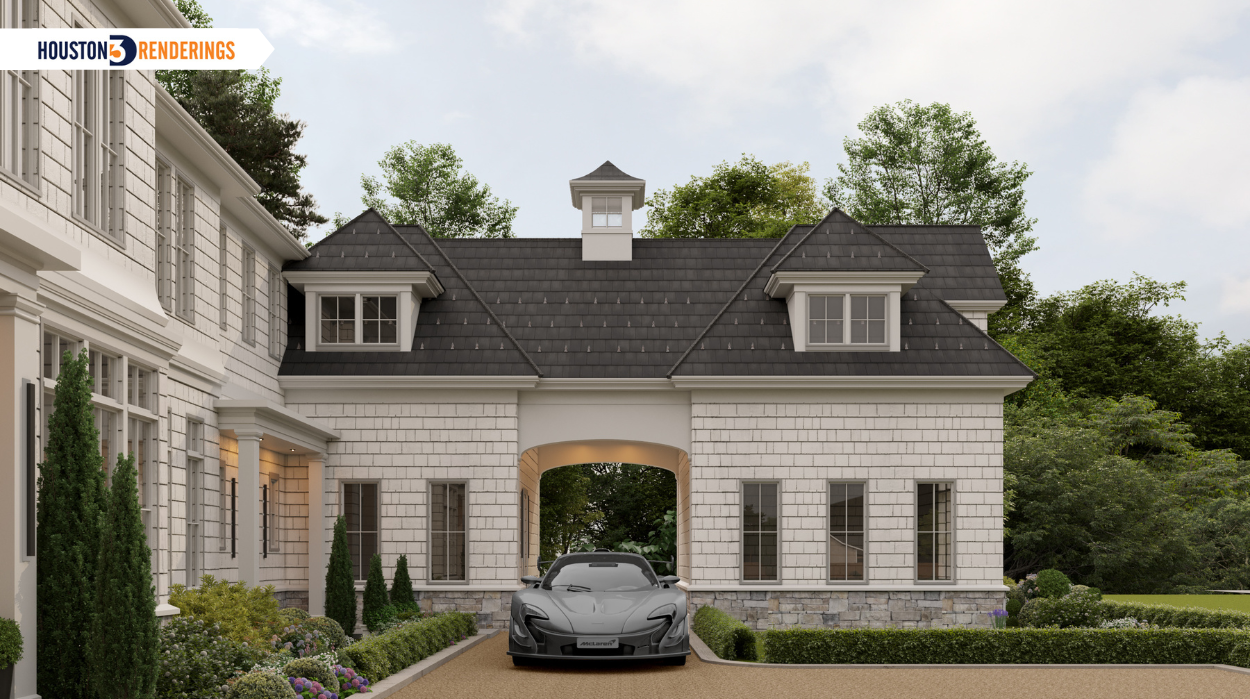
From this vantage point, the architectural truth of the home becomes unmistakable.
This view serves not just as an image, but as a reassurance of architectural integrity.

The backyard was more than an outdoor space — it was a second living environment. The design needed to feel elevated yet comfortable, sculpted yet natural, modern yet warm.
So we composed the space with intention:
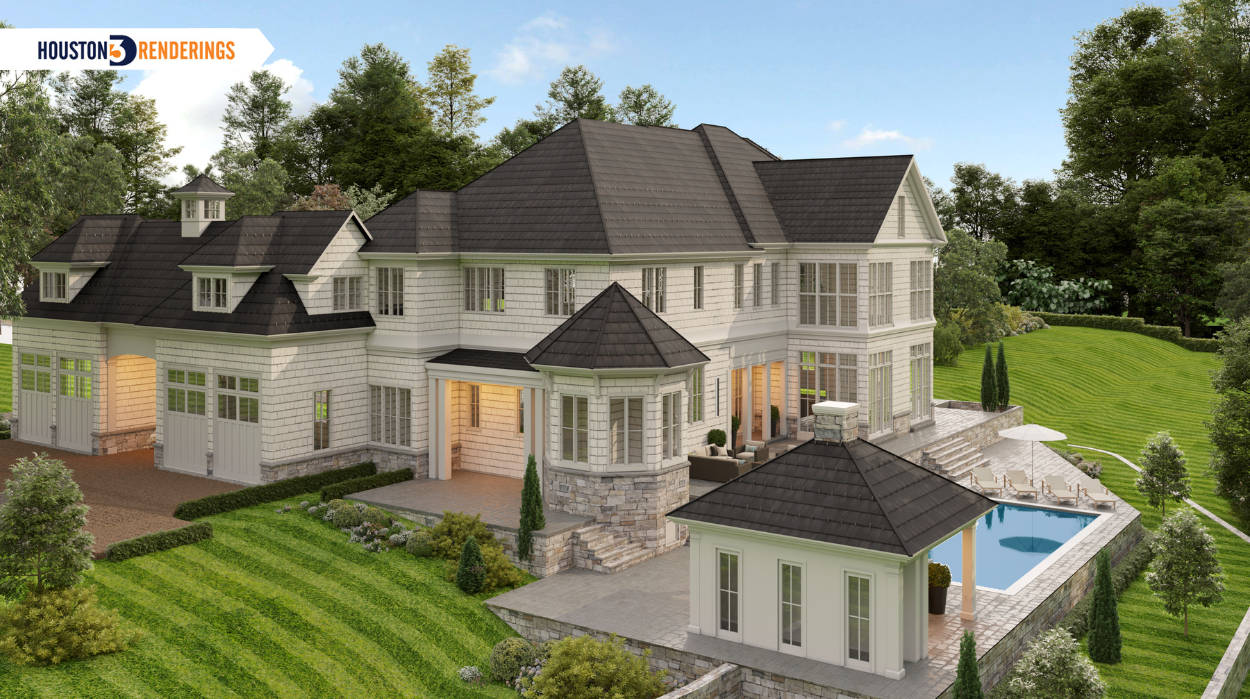
All exterior elements, from roof textures to linear lighting, window trims, and stonework, were meticulously adjusted to reflect the client’s vision. Each view captures the home’s modern-luxury character while maintaining material accuracy, architectural clarity, and visual cohesion across multiple perspectives.

The material palette emphasized brightness, warmth, and natural grain without losing the clean contemporary lines client wanted. Subtle marble veining, layered oak textures, and strategic lighting guided how the interior would appear once rendered.
The family/living room visuals emphasized comfort, sophistication, and architectural clarity:
This approach ensured the space felt both luxurious and livable, translating the vision into a photorealistic, inviting interior.

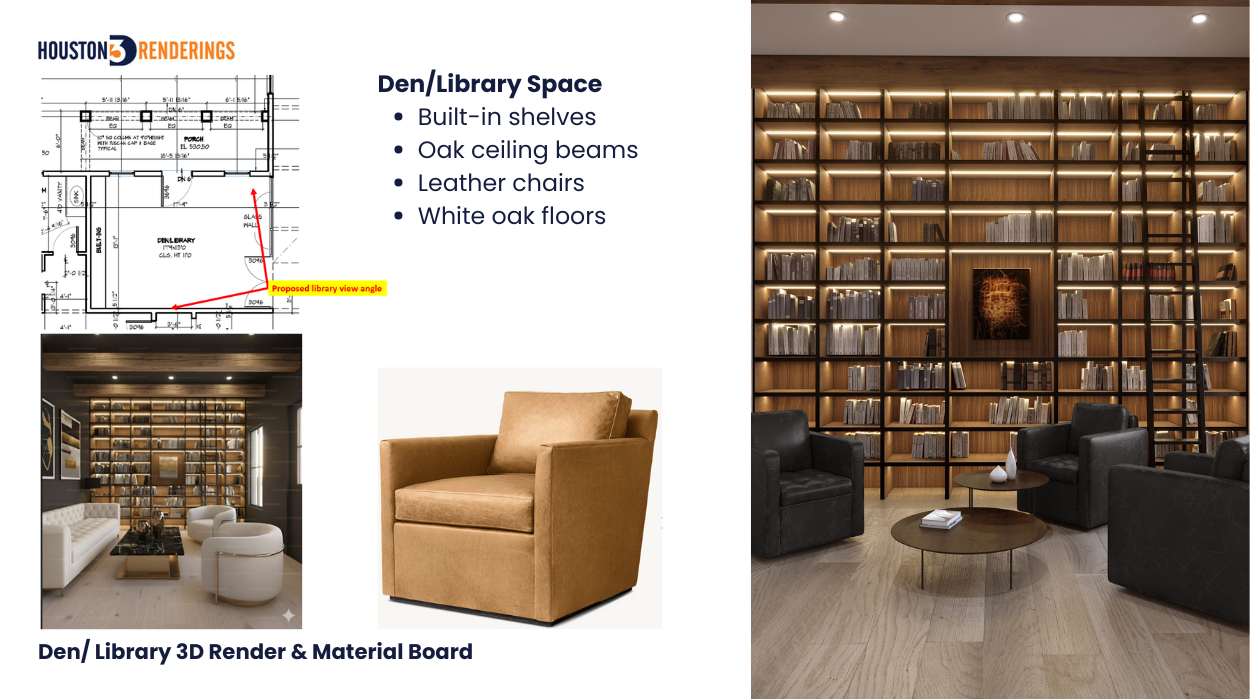
For the den/library, the client wanted a rich, intimate atmosphere. Deep, warm tones paired with oak textures and soft lighting defined the space.
Every detail, from shelving tone to beam depth, contributed to a den that feels quiet, refined, and intentionally composed.
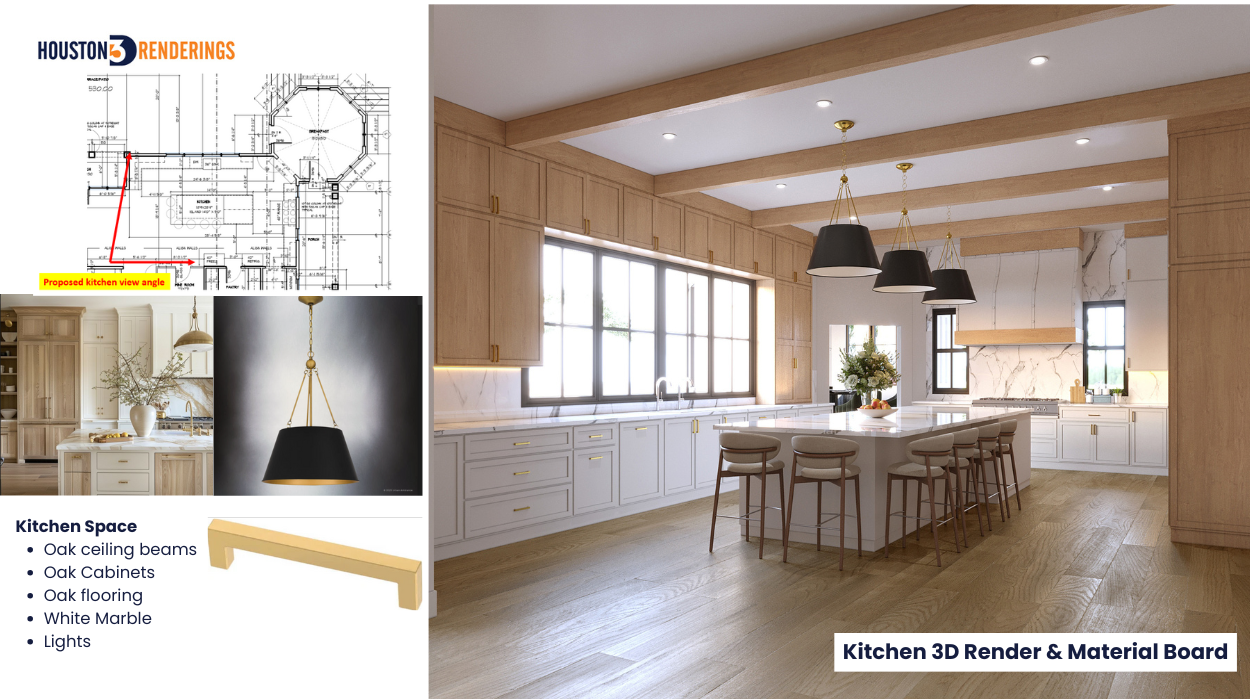
The kitchen narrative centered on a clean luxury aesthetic, white-painted cabinetry paired with warm white oak, a light marble feature wall, gold hardware, and elegant three-pendant island lighting. These elements formed the backbone of the material board.
From there, we shaped the visual direction:
Throughout this project, our communication with Eric was continuous, clear, and intentional. Every detail he shared, from material tweaks to angle adjustments, helped us refine the visuals with accuracy and speed.
Because of this fluid back-and-forth, Eric received renderings that aligned perfectly with the client’s expectations, transforming early uncertainty into clarity and full confidence.
Every project starts as a spark — a sketch, a reference photo, a conversation, or that one moment where the idea finally clicks. What brings it to life isn’t just design… it’s clarity. That’s why we do what we do.
At Houston3DRenderings, our goal is simple: help people see their project before the work even begins. Not just as a flat image, but as something they can stand behind, pitch confidently, and move forward with.
If you ever reach a point where your ideas feel bigger than a drawing or a description, you know where to find us. We’ll turn that spark into something real — something you can build on, share, and be proud of. Explore more projects and possibilities at www.Houston3DRenderings.com.