December 20, 2025
By 2026, architectural visualization will no longer be about “selling a design.” It will be about removing uncertainty.
Clients today aren’t just approving projects — they’re protecting budgets, timelines, and reputations. They want to understand what they’re committing to before the first brick is laid or the first wall is demolished. And as expectations rise, so does the pressure on architects, builders, and designers to communicate ideas clearly, quickly, and convincingly.
This is why visualization is no longer treated as an optional add-on. It has become a decision-making tool.
Across residential, commercial, and mixed-use projects, the role of 3D visualization is evolving rapidly. The trends shaping 2026 aren’t about flashy graphics or novelty tech — they’re about confidence, clarity, and control.
At www.Houston3DRenderings.com, we see this shift daily. Here’s what architects, builders, and designers should expect as visualization continues to redefine how projects move forward.
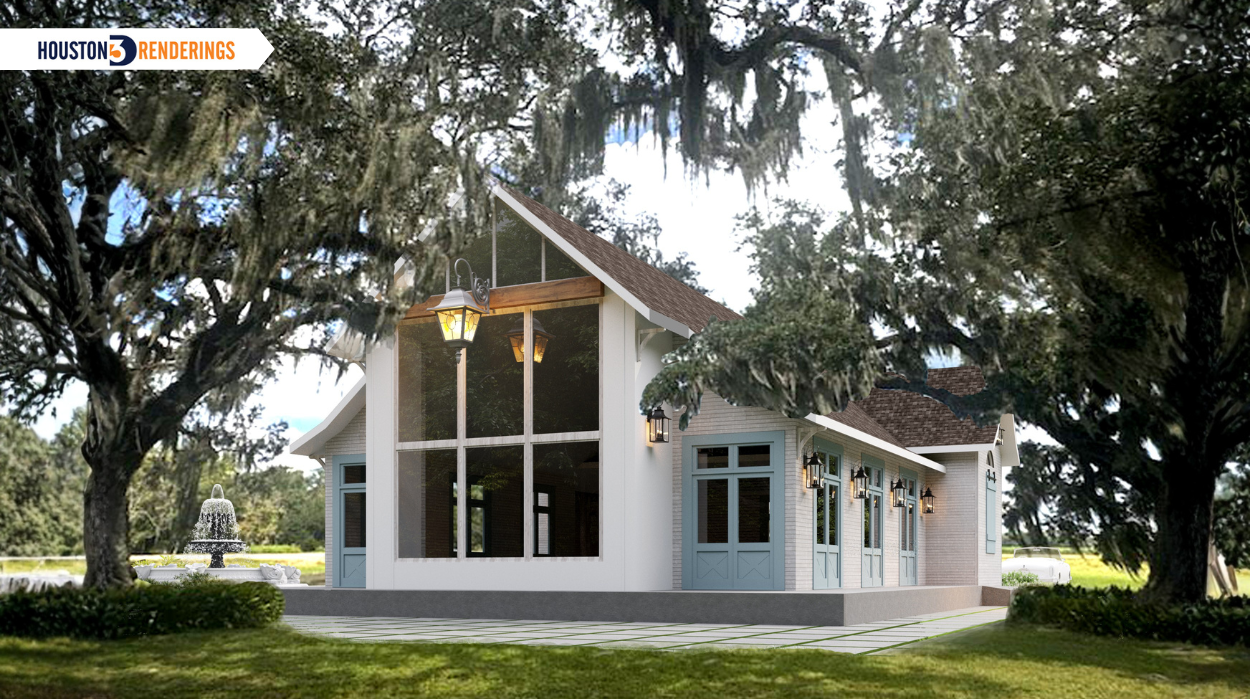
The days of presenting a single static image and hoping the client “gets it” are quietly ending. In 2026, clients want to experience a space — not interpret it.
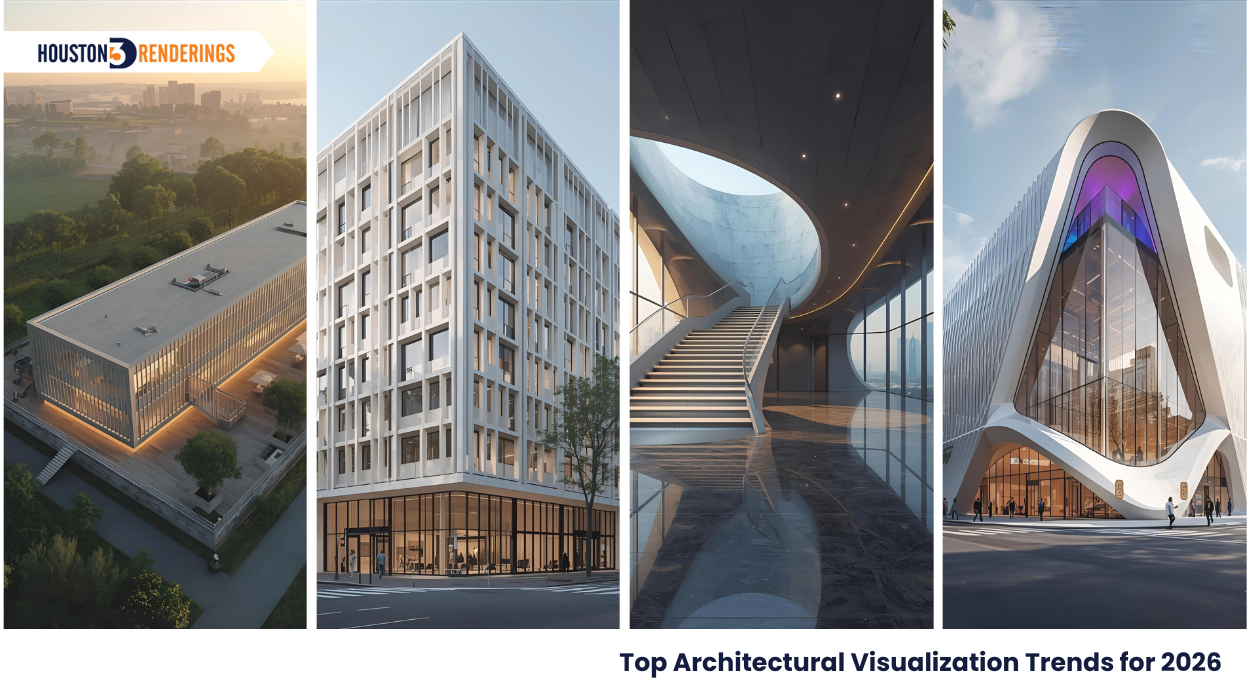
Walkthrough animations, cinematic perspectives, and carefully staged interior and exterior scenes are becoming standard expectations, not premium extras. These visuals help clients immediately understand scale, flow, and spatial relationships without needing technical explanations.
What modern visualization now communicates:
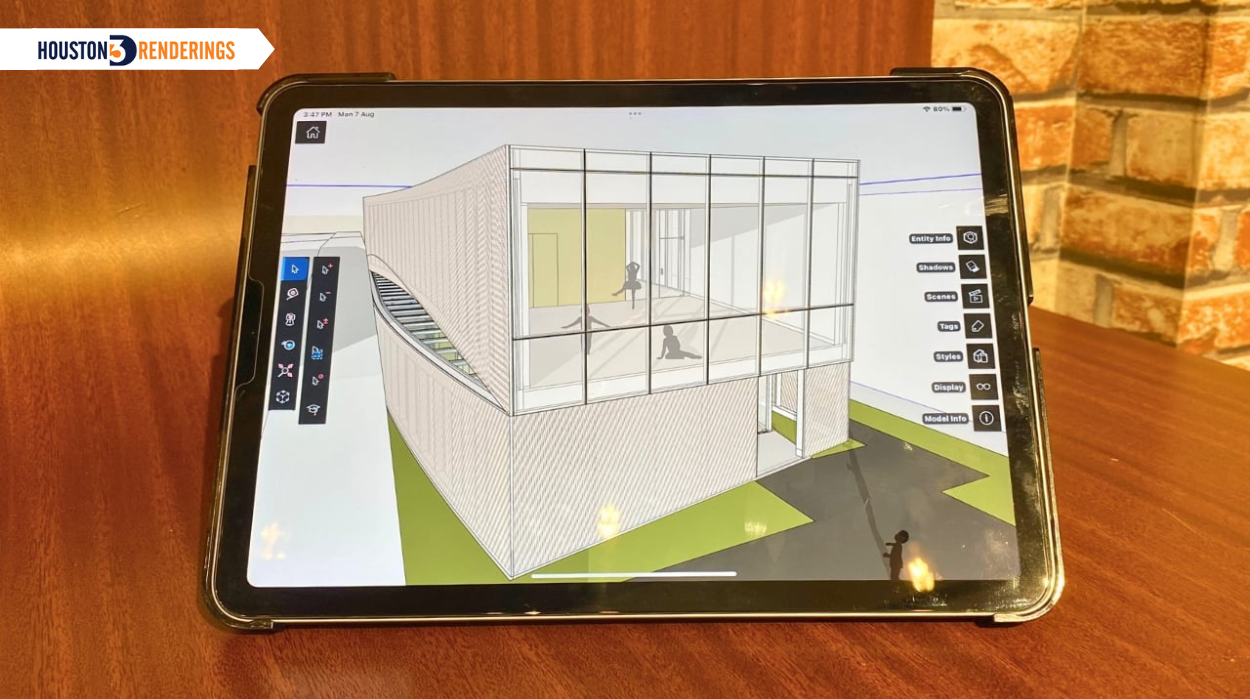
Artificial intelligence is changing how visualization teams work — but not why they work.
In 2026, AI plays a valuable role in early design exploration and efficiency. It helps accelerate iterations, test lighting conditions, and support material experimentation. But it doesn’t replace architectural understanding or creative judgment.
AI is most effective when used for:
At Houston 3D Renderings, AI supports the process — but every final image is shaped by experienced visualization artists who understand architecture, design intent, and how clients think.
Long revision cycles are becoming a liability. As projects move faster and budgets tighten, architects and developers expect visualization partners who can adapt quickly — without restarting from scratch every time a change is requested.
This shift toward agile workflows delivers:
Visualization is no longer the final step before presentation. It’s an active, evolving part of the design conversation — helping teams course-correct early instead of fixing problems later on-site.
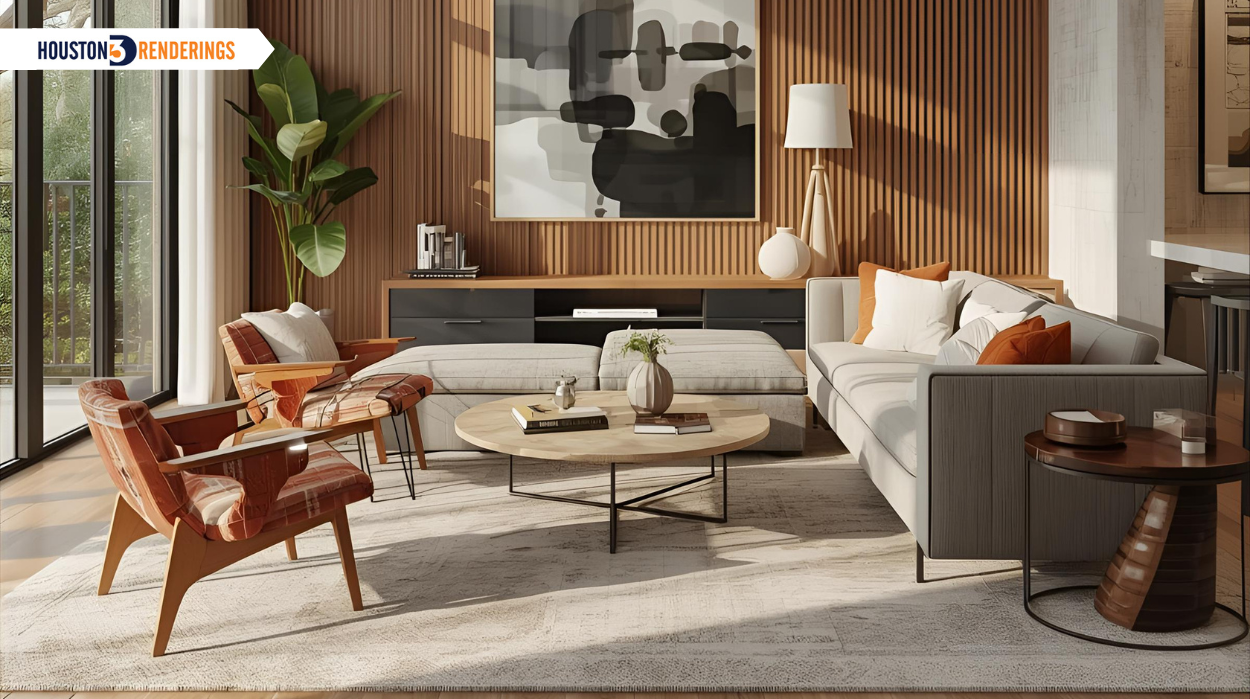
Photorealism still matters — but in 2026, emotional realism matters more. Clients don’t approve projects because every detail is technically flawless. They approve projects when a visual feels right. When they can imagine themselves inside the space. When the atmosphere aligns with the intended lifestyle or brand.
Successful renderings now focus on:
A beautifully composed rendering that feels lived-in often outperforms a technically perfect but emotionally flat image. This is where experience makes the difference — knowing not just how to render, but what to emphasize.
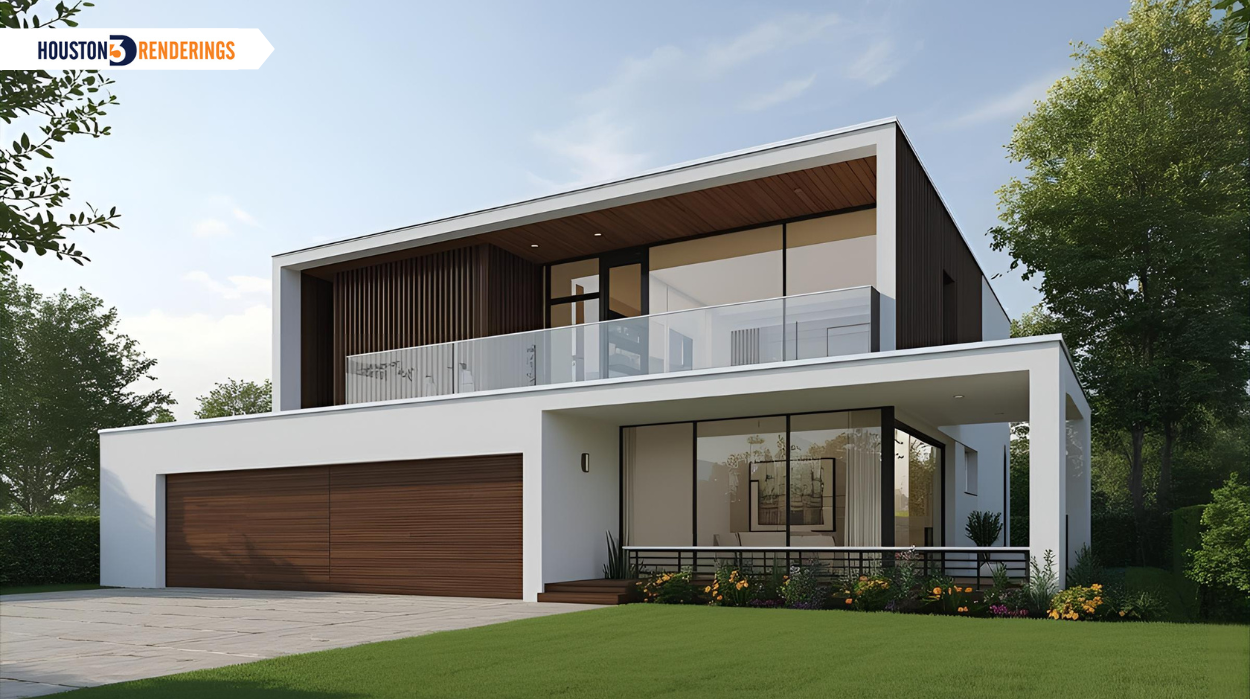
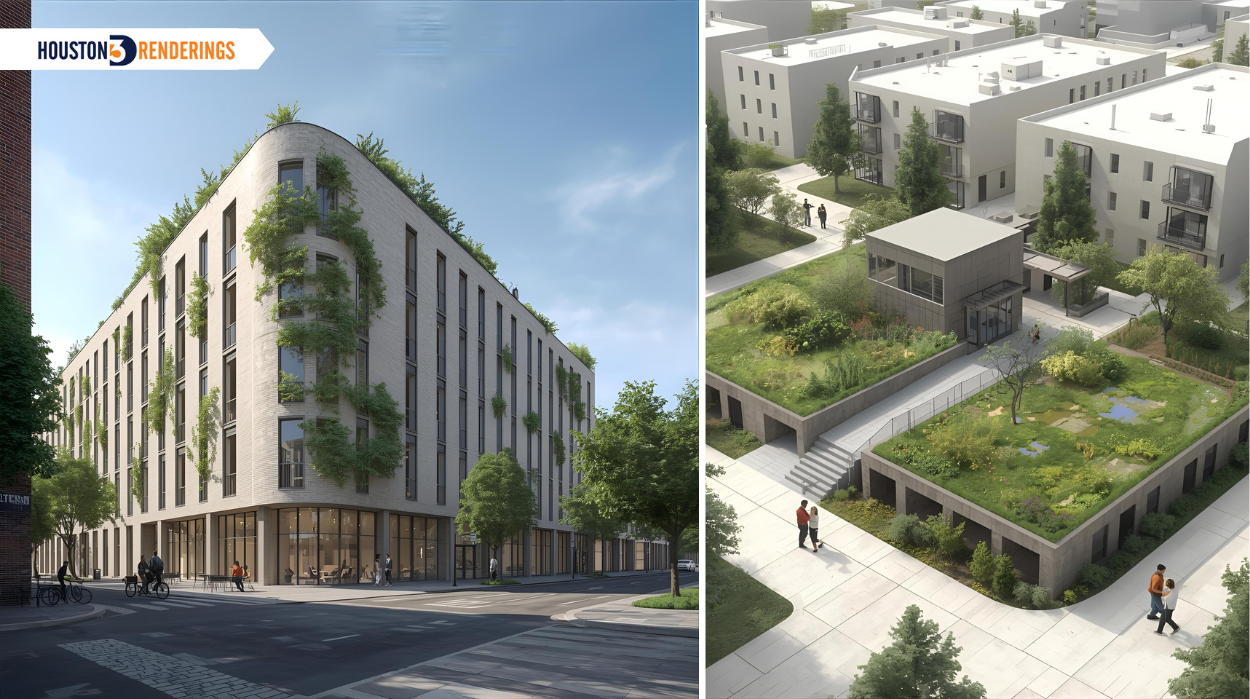
Sustainable design is no longer a checkbox or a paragraph in a proposal. By 2026, clients want to see sustainability — not read about it.
Visualization increasingly highlights:

Perhaps the most significant shift of all: visualization is directly influencing approvals, funding, and deal closures.
High-quality 3D renderings help:
In 2026, architects and builders who invest in strong visualization won’t just present better projects. They’ll close them faster.
As client expectations rise, average visuals will quietly fall behind. The renderings that succeed in 2026 will be those that communicate design intent clearly, emotionally, and persuasively — not just accurately. They will support decisions, strengthen presentations, and build confidence across every stage of a project.
At www.Houston3DRenderings.com, we help architects, builders, and designers stay ahead by creating custom, high-end visualizations designed to do more than look good — they help projects move forward.
If your next project needs clarity before construction begins, you already understand the value of seeing it first. Explore what’s possible at www.houston3drenderings.com.