January 09, 2026
The most expensive mistake in 2026 construction isn’t a bad contractor. It’s starting a build without seeing it first.
Projects don’t fail because teams lack talent. They fail because people are imagining different outcomes. A client sees one thing. A builder assumes another. An investor hesitates because nothing feels real yet. By the time those differences surface, they’re no longer design problems — they’re budget problems.
In 2026, relying only on plans and elevations is no longer “traditional.” It’s risky. Visualization has quietly become the safety net that prevents misalignment, delays, and expensive revisions before construction even begins.
This shift isn’t coming. It’s already here. Skipping visualization today doesn’t just risk a design mismatch. It creates misalignment between teams, slows approvals, and opens the door to costly revisions once construction is already underway.
At Houston 3D Renderings, we see a clear pattern: the smoothest, most confident projects are the ones that are fully visualized long before the first dollar is spent on construction.

Modern construction leaves very little room for interpretation.
Projects are larger. Timelines are tighter. Teams are more distributed. And expectations — from clients, investors, and municipalities — are higher than ever. In this environment, relying solely on floor plans, elevations, and written descriptions creates natural gaps.
Those gaps show up quickly:
These misunderstandings don’t come from lack of expertise — they come from lack of clarity.
Visualization removes guesswork by giving every stakeholder the same shared understanding from the very beginning. Everyone sees the same outcome. Everyone moves in the same direction.
In 2026, visualization isn’t about making a project look impressive. It’s about making it understandable.
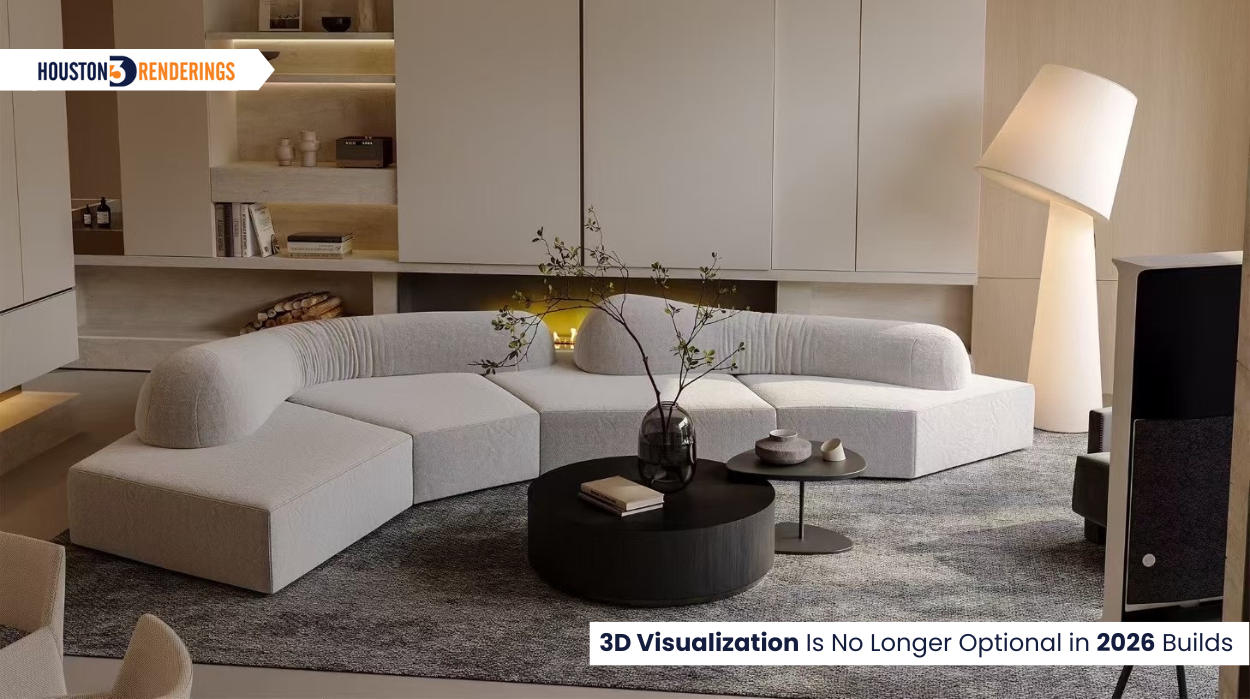
High-quality 3D renderings, walkthroughs, and exterior visuals translate complex architectural ideas into something instantly clear. They bridge the gap between technical drawings and real-world experience, allowing architects, developers, engineers, city officials, and buyers to align without lengthy explanations.

When everyone can clearly see the end result:
Visualization has become a shared language — one that removes assumptions and replaces them with clarity.

One of the most valuable benefits of architectural visualization often happens quietly: fewer revisions.
When projects are visualized early:
For builders and developers, this translates into smoother approvals and fewer surprises during construction. For architects and designers, it means stronger presentations and less back-and-forth later in the process. Visualization is no longer a final step — it’s an active part of smarter planning.
In 2026, investors expect more than drawings. They expect clarity.
Visualization allows investors to quickly understand scale, context, and intent. It shows how a project fits into its surroundings and how it delivers value beyond square footage. In competitive markets like Houston, that clarity can be the difference between momentum and delay.
A strong 3D visualization doesn’t just show what a building will look like. It communicates experience, function, and long-term potential.
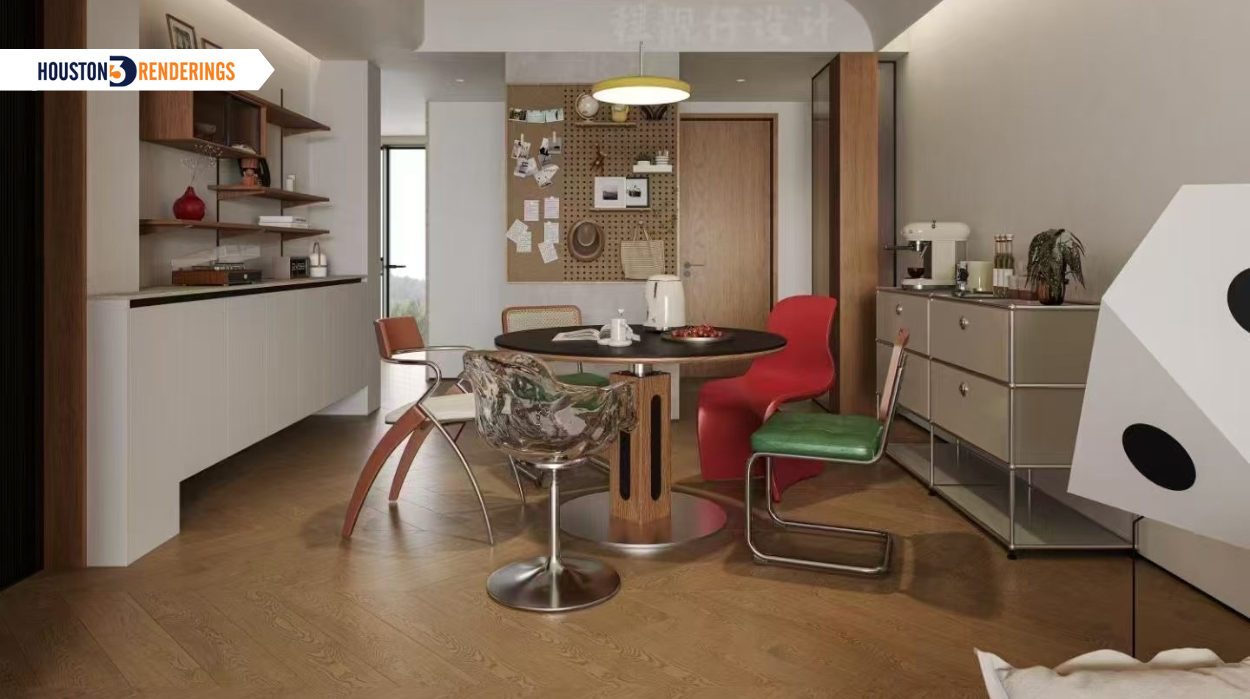
What’s changed most isn’t the technology — it’s the expectation.
Visualization is no longer treated as an optional upgrade or a marketing extra. It’s now part of the standard workflow for serious projects. From municipal reviews and client presentations to pre-leasing efforts and internal coordination, accurate visuals have become essential.
Projects that skip this step often find themselves playing catch-up — correcting misunderstandings that could have been resolved long before construction began.
As the industry continues to evolve, one thing is clear: visualization isn’t about impressing people — it’s about aligning them.
At Houston 3D Renders, we help teams move forward with certainty by turning ideas into clear, communicative visuals that reduce hesitation, streamline decisions, and keep projects on track — long before construction begins.
The strongest projects in 2026 won’t rely on assumptions.
They’ll rely on clarity.
Explore visualization built to support real decisions at www.houston3drenders.com