February 19, 2026
Designing a building exterior is not just about elevations and measurements; it’s about perspective. How materials meet at the corners, how colors transition across façades, and how the structure presents itself from every critical angle before construction begins.
For this project, the objective was clear: deliver two high-quality 3D corner view renderings that accurately captured the building from both the front-left and rear-right perspectives. Each view needed to communicate the architectural massing, façade details, and overall composition with precision.
With detailed material references and color placement guidelines provided, there was no room for assumptions. Every finish and surface transition had to reflect the design intent exactly. Houston 3D Renderings translated those technical references into photorealistic exterior visuals, providing complete clarity before moving forward.
Every architectural project begins with drawings, elevations, material callouts, and detailed notes that define the design intent. But even the most precise technical documents cannot fully communicate how a building will feel when viewed from key exterior angles.
For this project of Micheal, one core question guided the visualization strategy:
How do you clearly understand the building’s full exterior presence before construction begins? The objective was to produce two strategic 3D corner view renderings:
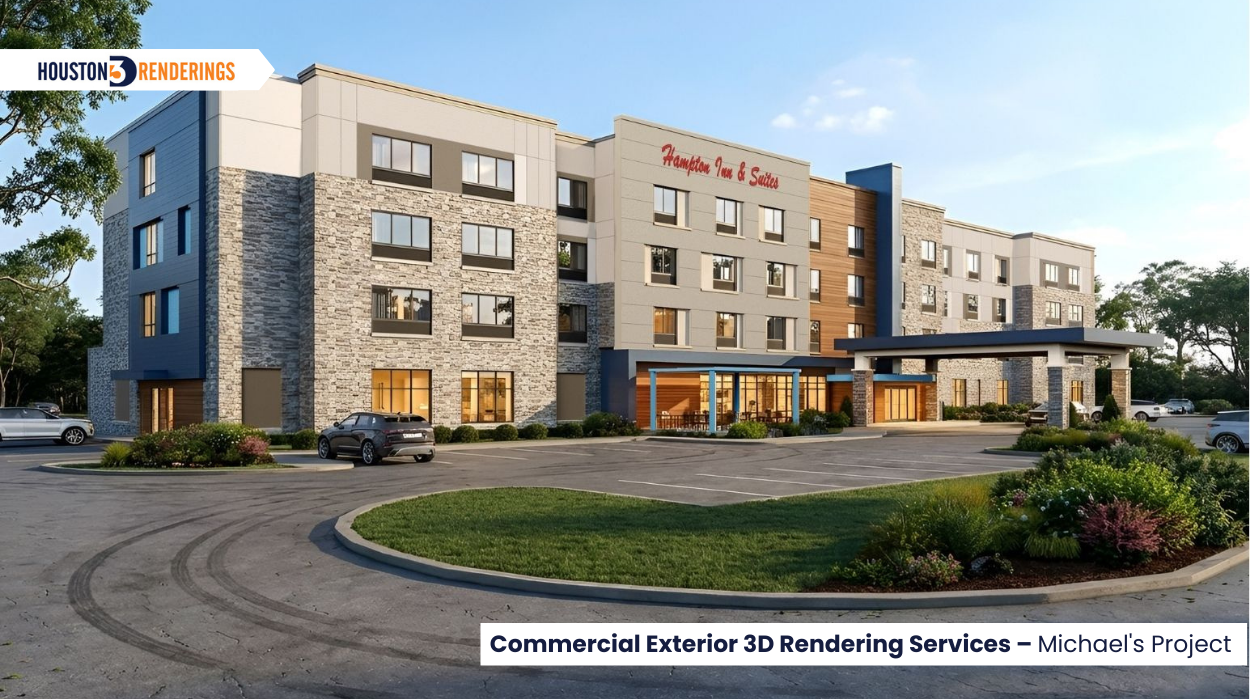
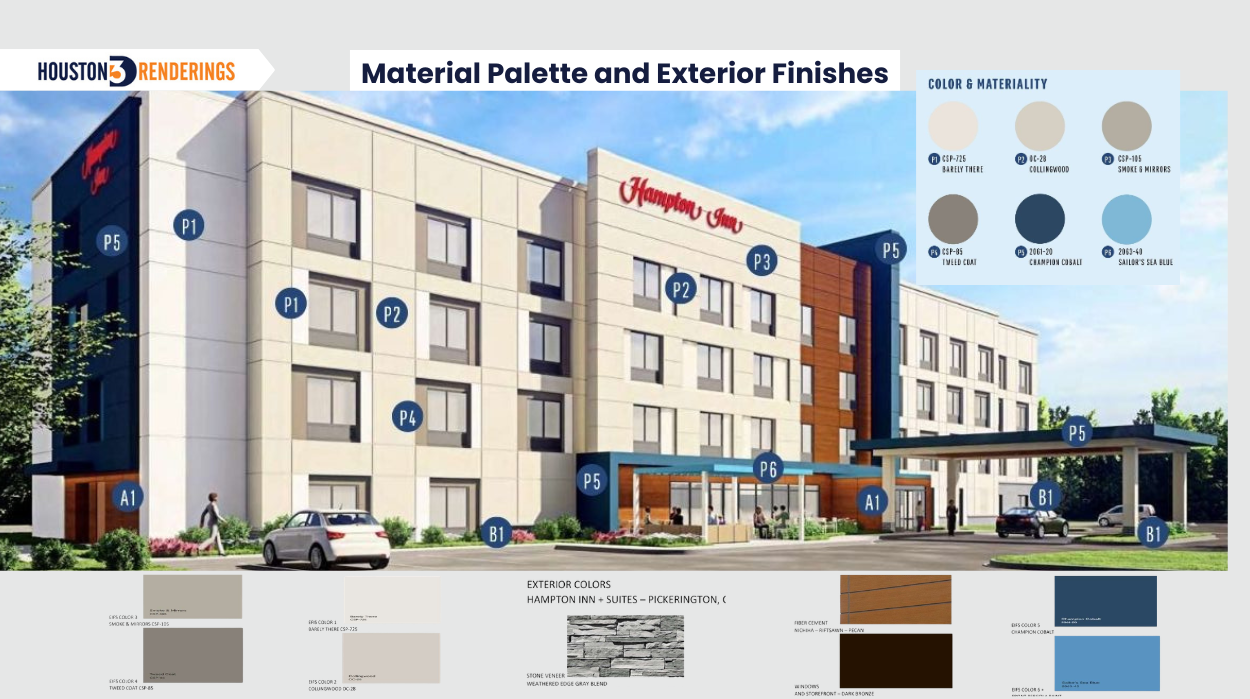
The exterior visualization focused on accurately translating the approved material palette into realistic, build-ready visuals. Every rendering was developed to reflect how selected finishes and colors would interact across the building’s façades when viewed from the specified corner angles.
The material and color selections were guided by detailed reference documentation, ensuring precise placement and consistency throughout the structure.
The color and material selections included:
The objective was to clearly demonstrate how these tones and textures interact across the building envelope, particularly at corner transitions where materials meet and contrast becomes most visible. Special attention was given to ensuring EIFS finishes complemented the masonry elements, while simulated wood accents introduced warmth and depth to the overall composition.
During the review process, several refinements were implemented to ensure the renderings precisely reflected the design intent.
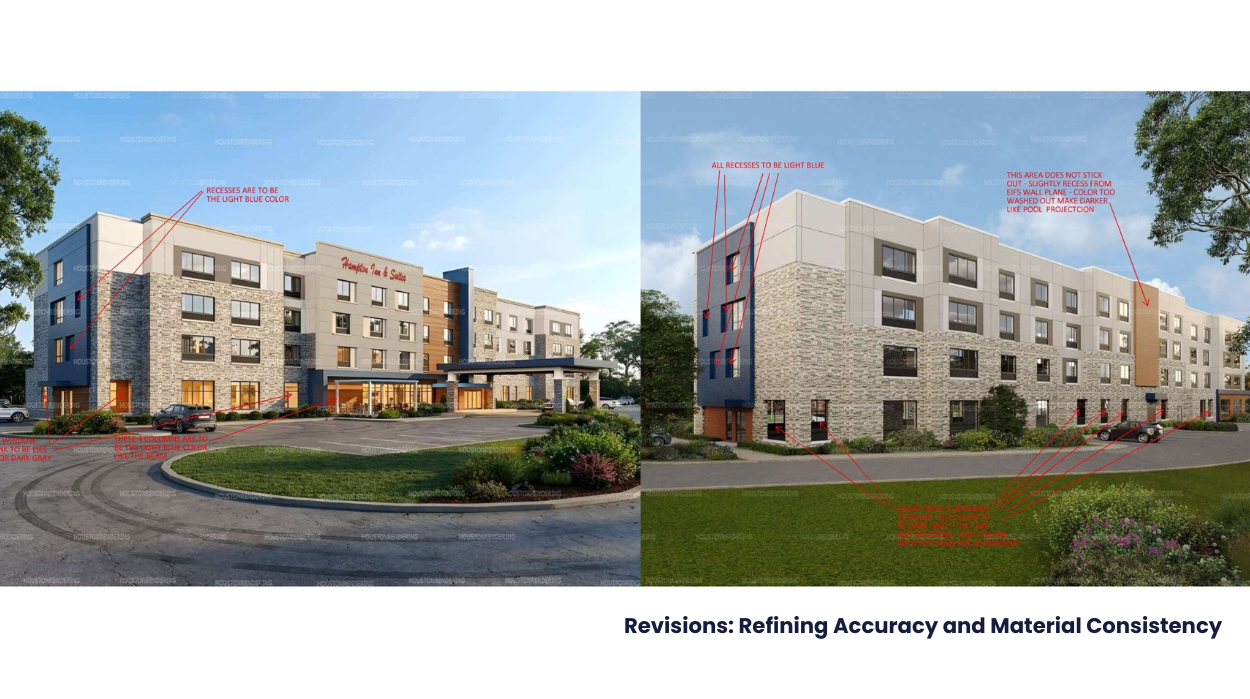
These revisions enhanced both the front and rear renderings, providing a more precise and true-to-design visualization that allowed stakeholders to fully evaluate materials, color relationships, and architectural intent before construction.
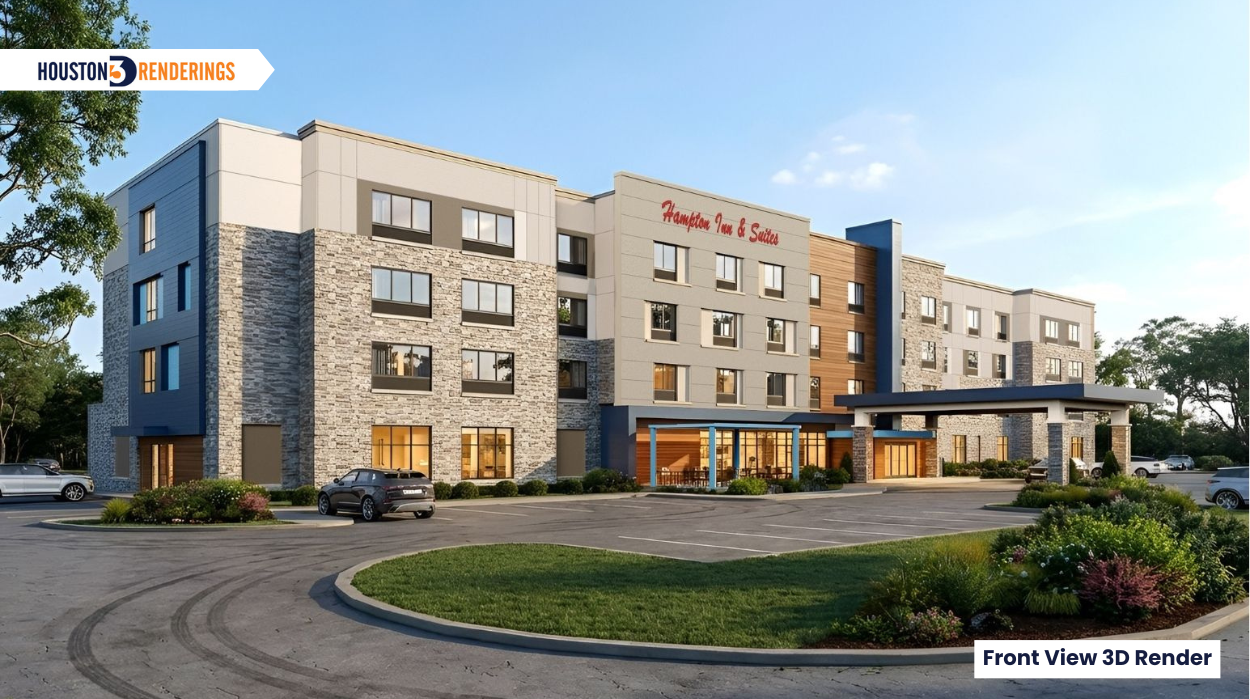
The front elevation rendering emphasized the building’s main presence and approach, ensuring the entry experience felt intentional and cohesive. Corner views highlighted how materials transitioned across the façade, with careful placement of EIFS, gray masonry, and simulated wood accents to create visual interest and balance.
Key updates included:
The result was a front façade that communicated clarity, balance, and modern design intent — allowing stakeholders to see exactly how the building would present itself from the street.
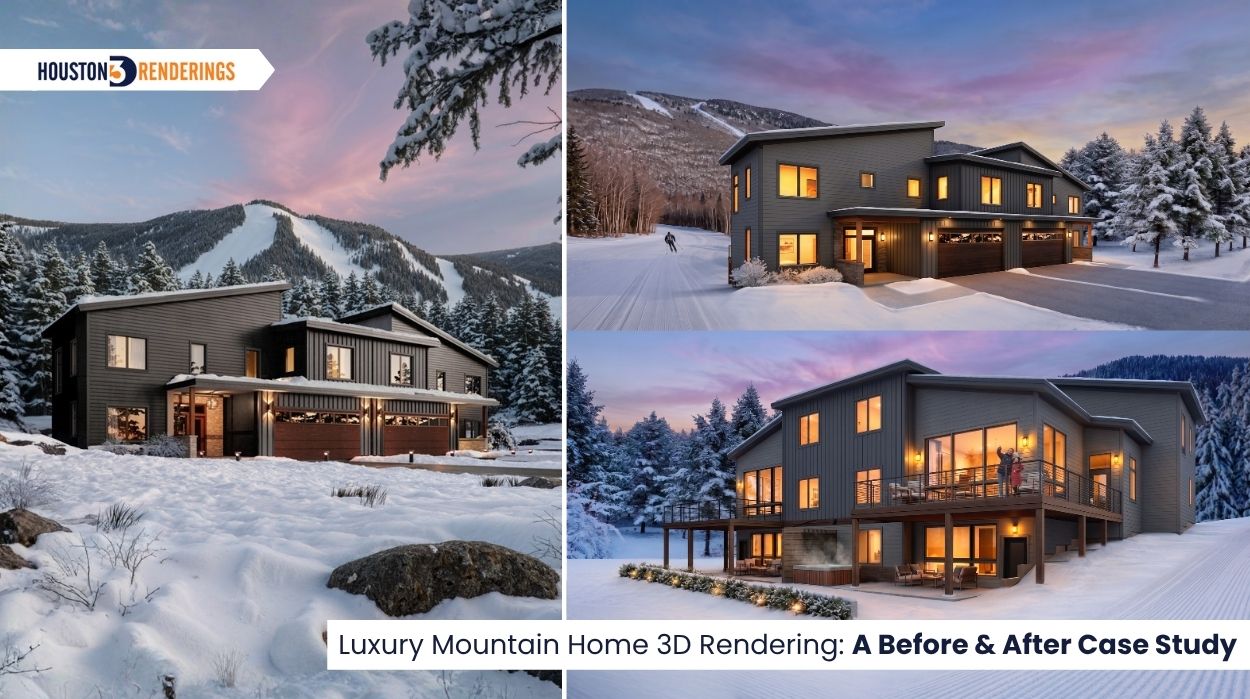
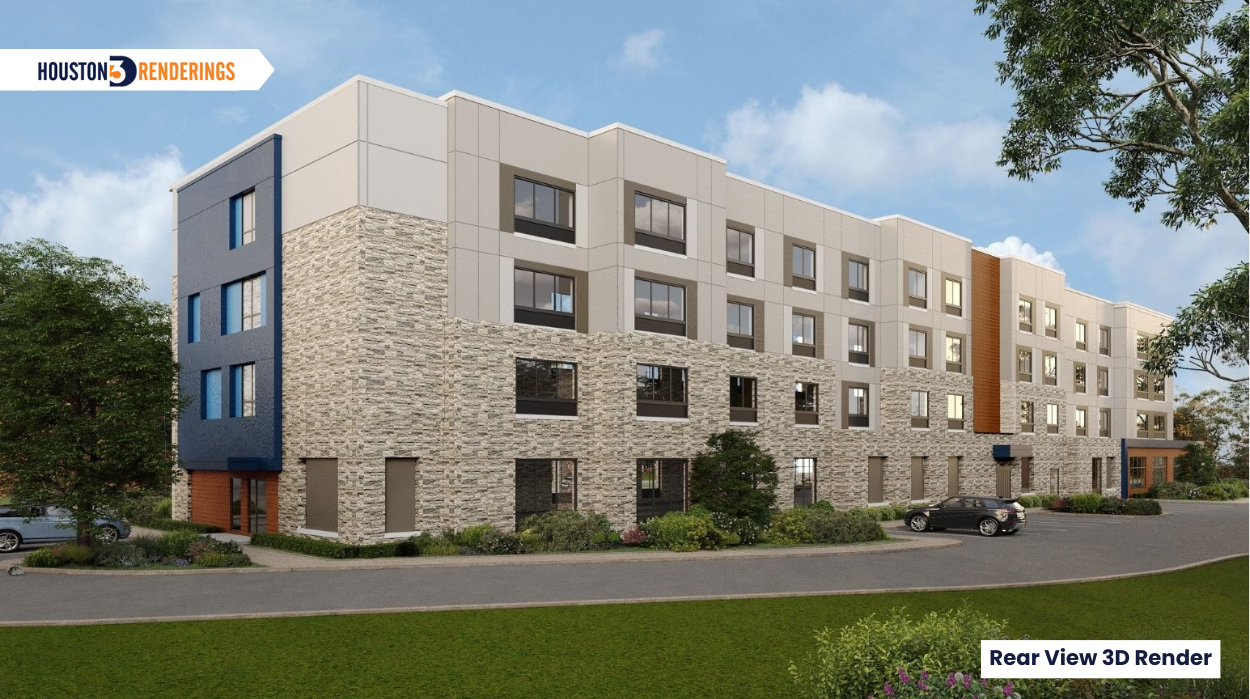
The rear elevation focused on the building’s connection to exterior living areas and surrounding landscapes. 3D corner perspectives captured how materials wrap around the structure and how outdoor spaces interact with the architecture.
Highlights included:
These renderings allowed the client to fully understand spatial relationships, material cohesion, and the functionality of outdoor areas — providing confidence in both design and construction decisions before ground was broken.
Construction leaves no room for guesswork. Accurate 3D renderings give stakeholders the full picture before ground is broken, helping decisions happen confidently and efficiently. At Houston 3D Renderings, we help builders and designers see the full picture — so every decision is confident, precise, and on schedule.
Accurate 3D renderings turn plans into clarity:
At www.Houston3DRenderings.com, builders gain clarity where it matters most: before costly changes occur on site. When the vision is clear, the project follows seamlessly.