October 10, 2026
A rendering deadline rarely exists on its own. There is usually something waiting behind it: a client presentation, a development pitch, a planning meeting, a marketing launch, a sales campaign, or simply the next decision that needs to be made.
That is why “How fast can you deliver?” is such a common question in architectural visualization. But speed by itself isn't the goal.
A rendering that arrives quickly but needs to be redone three times isn't really a fast rendering. The real challenge is moving through the process efficiently while keeping the final image at the quality the project demands. So what actually helps a rendering project move faster?
A visualization project can move surprisingly quickly when everyone involved already knows what is being produced.
These may sound like straightforward questions, but unanswered details tend to reappear later as revisions, clarifications or changes in direction. A clear brief gives the visualization team something much more useful than a deadline: a defined starting point. That matters particularly when the project is moving under pressure.
For a rendering team, a reference image is rarely just a reference image. It can answer a question before that question has to be asked.
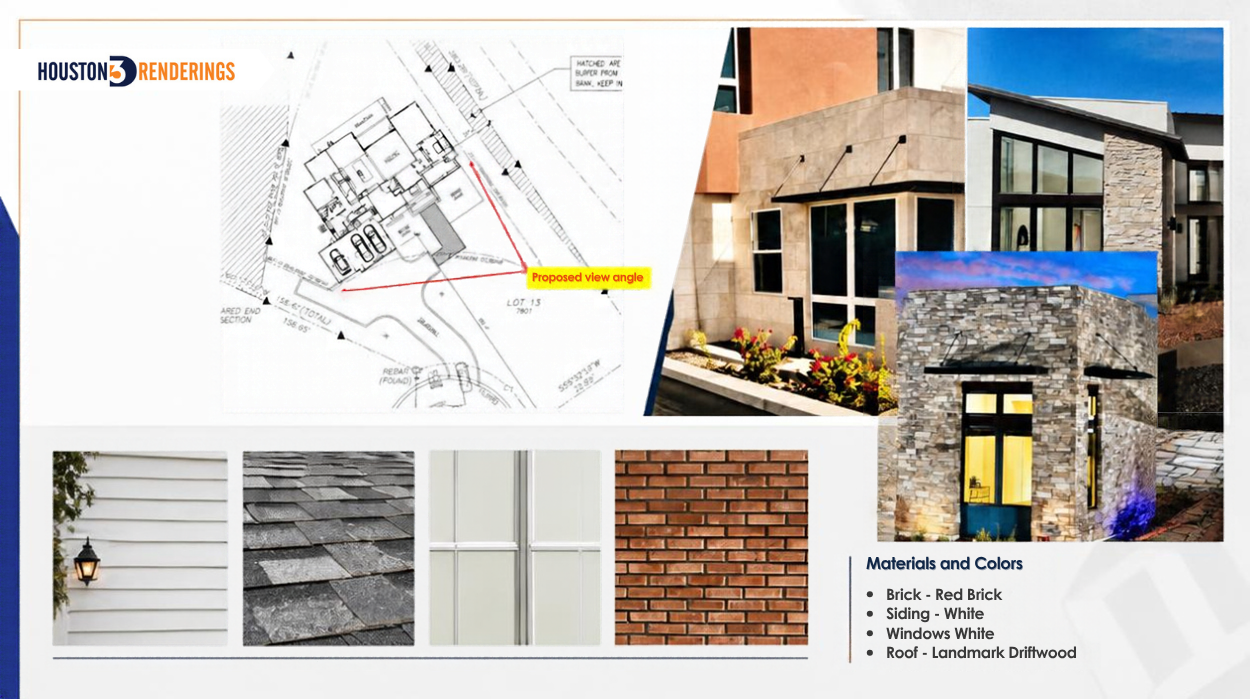
A flooring sample can establish a finish. A furniture reference can remove guesswork. A landscape plan can clarify what belongs around the building. An elevation can resolve a façade detail that might otherwise require another round of discussion. The same applies to the architectural files themselves.
When the relevant drawings, dimensions, material selections and supporting references arrive together, the team can spend more time building the visualization and less time reconstructing the design from incomplete information. It is a small distinction, but across a project, these small delays add up.
A rendering rarely goes from first draft to final image without a conversation in between. That conversation can be efficient—or it can become the longest part of the project.

Consider the difference between receiving one consolidated set of revisions and receiving individual requests over several days:
None of these requests is unreasonable on its own. The problem is what happens when they arrive separately.
Clear, consolidated feedback gives the visualization team a complete picture of what needs to change. It also makes it easier to distinguish between a genuine design revision and a small preference that can wait. For projects with tight deadlines, that distinction can be significant.
“We need it urgently” tells a rendering team very little.
“We need three exterior views for a presentation next Thursday” is a production brief.
The difference is not simply wording. The second version provides information that can be used to assess the workload.
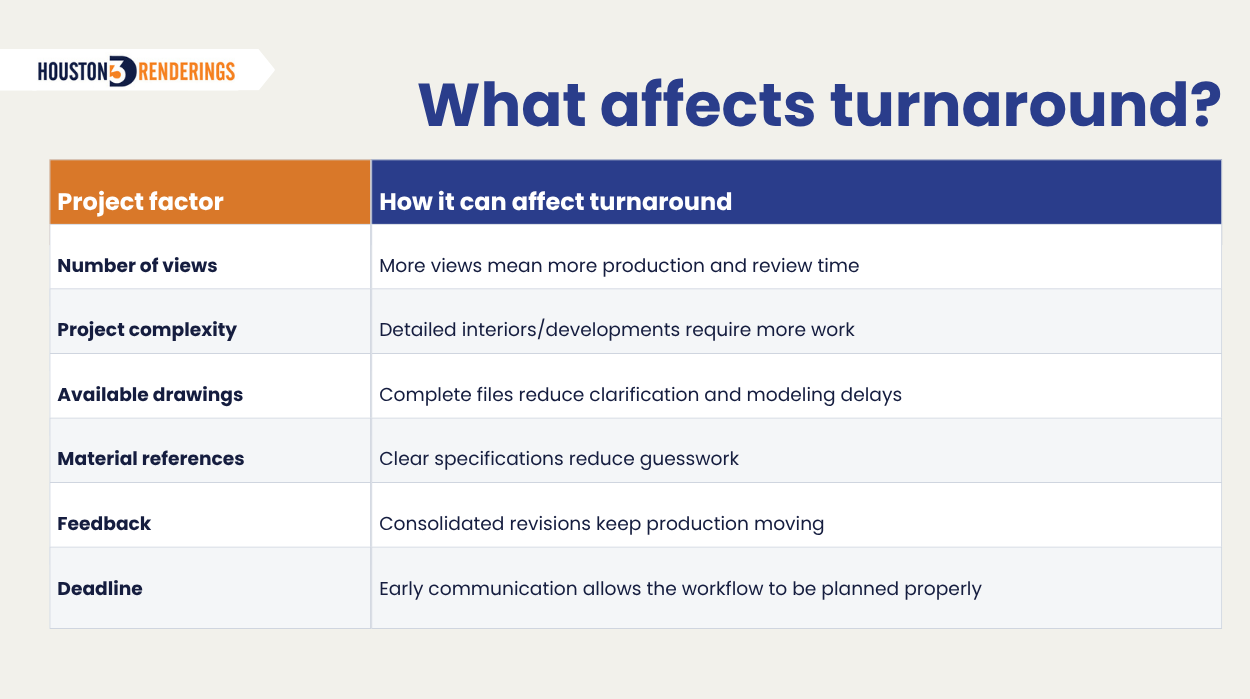
A detailed residential interior, a multi-building development and a simple exterior massing view will naturally require different amounts of work. The number of views, complexity of the scene, amount of modeling and level of detail all influence the timeline. That is why a realistic deadline should be discussed alongside the scope.
Sometimes everything can proceed as requested. Sometimes the priority is to complete a few key views first. Sometimes the deadline reveals that certain decisions need to be finalized before production can begin. The earlier that conversation happens, the more options there are.
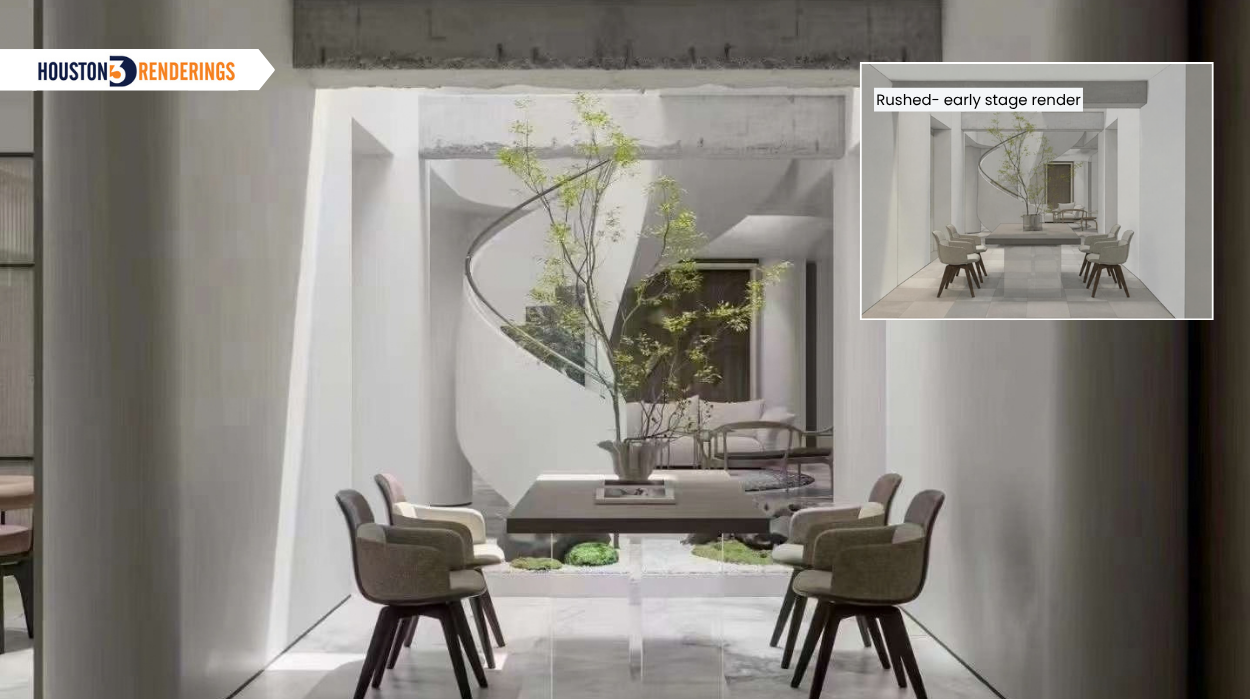
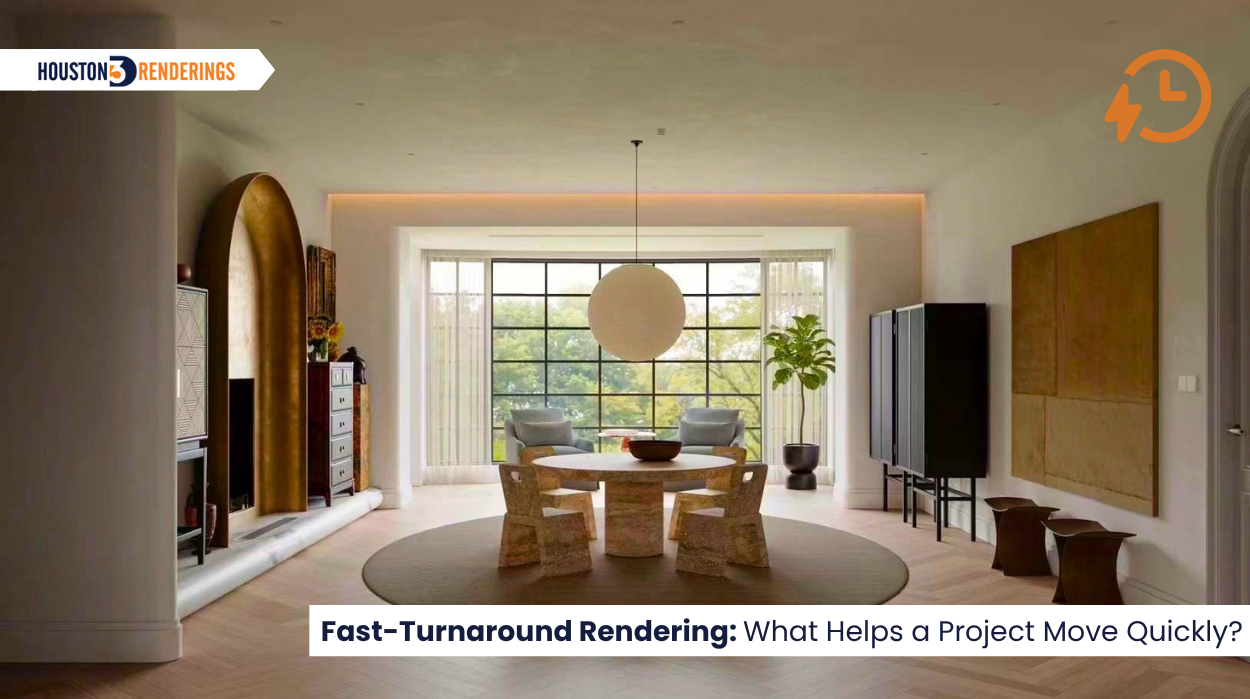
This is perhaps the most important distinction. There is a difference between a rushed rendering and an efficiently produced rendering. The first usually leaves traces: unresolved materials, weak lighting, missing context or details that were never given enough attention. The second can still look considered. The difference comes from the workflow.
When the scope is understood, the project information is available, the important views are identified and feedback moves efficiently, there is less time being spent on avoidable work.
The visualization itself still needs time. Materials have to behave convincingly under light. Reflections need to make sense. Scale needs to feel believable. The surrounding environment needs to support the architecture rather than compete with it. Efficiency should remove wasted time from those processes—not remove the processes themselves.
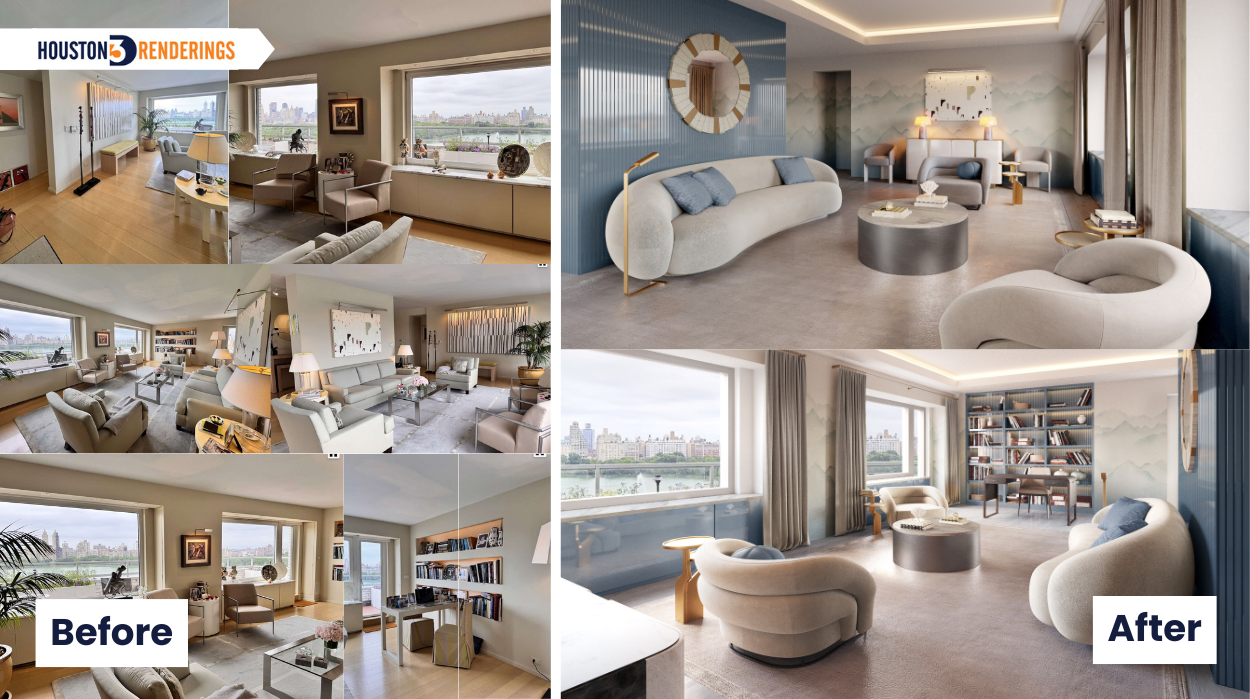
There is no shortcut that turns a complicated visualization into a simple one. But there are plenty of ways to make the process unnecessarily complicated.
These are small things, but they interrupt the production rhythm.
The opposite is not complicated either: know what needs to be shown, provide the information needed to show it, communicate the deadline, and keep decisions moving. That is where speed actually comes from. Not from asking a rendering artist to work faster. From giving the work fewer reasons to stop.
Some projects can't wait for a standard production schedule. An upcoming client meeting, a last-minute presentation or a time-sensitive marketing requirement may call for a much faster turnaround.
Houston3DRenderings offers 24-hour architectural rendering services for projects that are suitable for expedited production. Whether this timeline is achievable depends on the scope, complexity, number of views and availability of the required project information.
A clearly defined brief, complete drawings and prompt feedback can help make a short turnaround more manageable. For more complex projects, the team may recommend a different timeline or prioritize the most urgent views first.
Need a rendering within 24 hours? Share your project details and deadline so the team can review what's feasible before production begins.
Send Houston3DRenderings your architectural drawings, required views and target delivery date. Our team will review the project scope and provide a quote along with an estimated turnaround time.
If you need expedited or 24-hour rendering, let us know when you reach out. We'll assess your requirements and confirm whether the timeline is feasible.
Request a Rendering Quote: www.Houston3drenderings.com.
How fast can a 3D rendering be completed?
Turnaround depends on the project scope, number of views, level of detail, and how complete the project information is. For some projects, expedited or 24-hour rendering may be available.
What do you need to start a fast-turnaround rendering project?
The more complete the information, the smoother the process. Helpful files include CAD drawings, floor plans, elevations, site or landscape plans, material references, and the required camera views.
Can a rendering be completed quickly without sacrificing quality?
Yes. A clear scope, complete references, defined views, and efficient feedback can help reduce unnecessary delays while keeping the final visualization detailed and photorealistic.