April 09, 2026
Every architect has that client.
The one with no budget…
The one who knows everything…
The one you wish every project had…
And the one who changes everything last minute.
The real question is — how do you handle all of them without losing time, money, or sanity?
In architecture and 3D visualization, clients walk in with ideas, personality, and decisions that shape the entire project. But not all clients are ever same. Some trust you completely. Others question everything while some change their minds in the middle of process.
A meeting is scheduled. The drawings are ready. The vision, at least in your mind is clear. And somewhere between concept sketches and final approvals, one thing becomes clear, designing the space is only half the job. The other half is navigating the person behind it.
Almost every architect encounters these four types of clients and 3D visualization becomes the tool to keep things on track and keep projects swift.
The client that feels like a dream in beginning.
Those are the kinds of clients that want a “Royal Mansion” while saying casually there’s not much of a budget.
They love creativity. They want bold ideas. They are the ones with inspirations coming from everywhere: Pinterest boards, luxury hotels, a friend’s house they visited years back.
These limitless possibilities slowly need to move towards real targets.
That is where 3D visualization becomes a crucial tool.
Rather than focusing on abstract ideas, you can make real decisions with the power of photorealistic renderings and turn ideas into tangible design. From materials, lighting, and spaces, all working together. This gives your client a message to react when they see their project even before built.
Key roles of 3D visualization in managing these clients include:
Freedom is still there, but now it has direction.
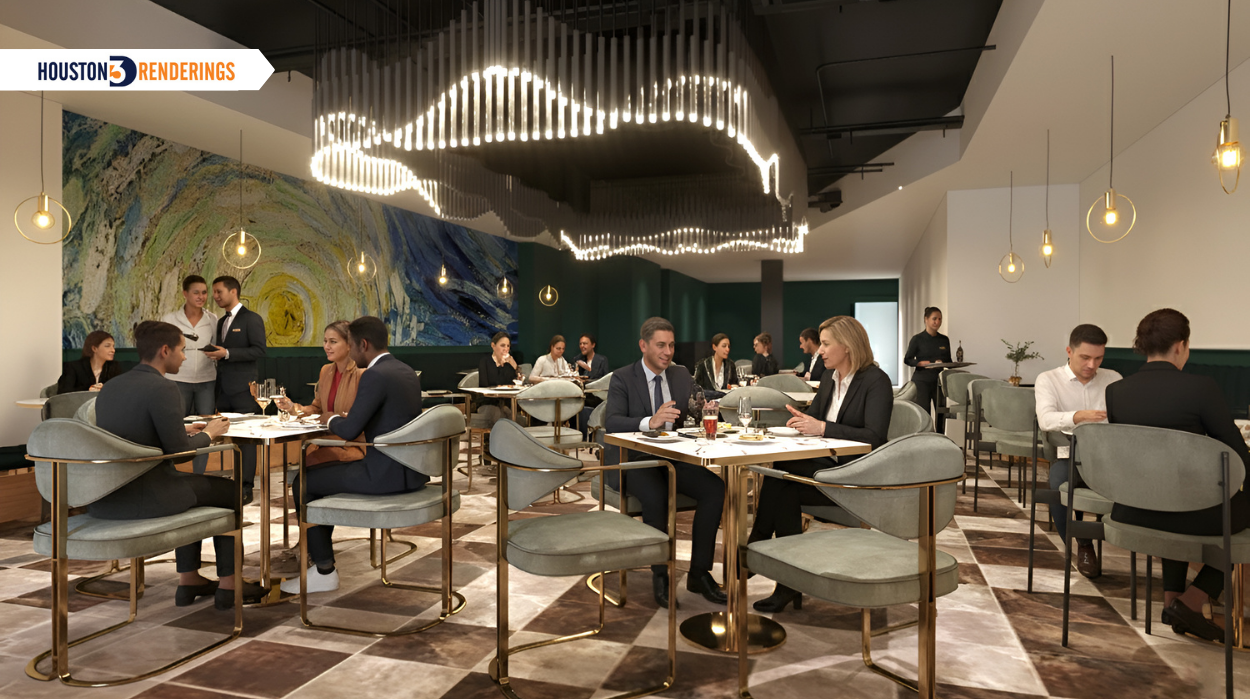
The one who knows everything.
“I think this elevation could be stronger,” they’ll say.
“Have you considered a different façade treatment?”
These are the clients who have done their research. They use industry terms like, “Façade, fenestration and cantilever. They might even sketch over drawings or give reference from online construction techniques.
While we love and respect their ideas but too much participation might make projects confusing.
Architecture projects are made with collaboration but too much involvement can slow down decisions and blur roles. Here, 3D renderings shift the conversation from opinion to clarity. 3D visualization plays a critical role in managing clients by shifting the conversation from subjective opinions to objective, photorealistic realities.
Here is the specific role of 3D visualization in handling such clients:
Every architect remembers this one.
They work with collaboration, trust your expertise while altogether staying engaged.
A good client in architecture is engaged, trusting, and clear about their goals, acting as a partner. They offer a clear vision, respect the architect's expertise, provide constructive feedback, and make timely decisions, ensuring the project remains on track. Working with them feels less like a project and more like a lasting relation.
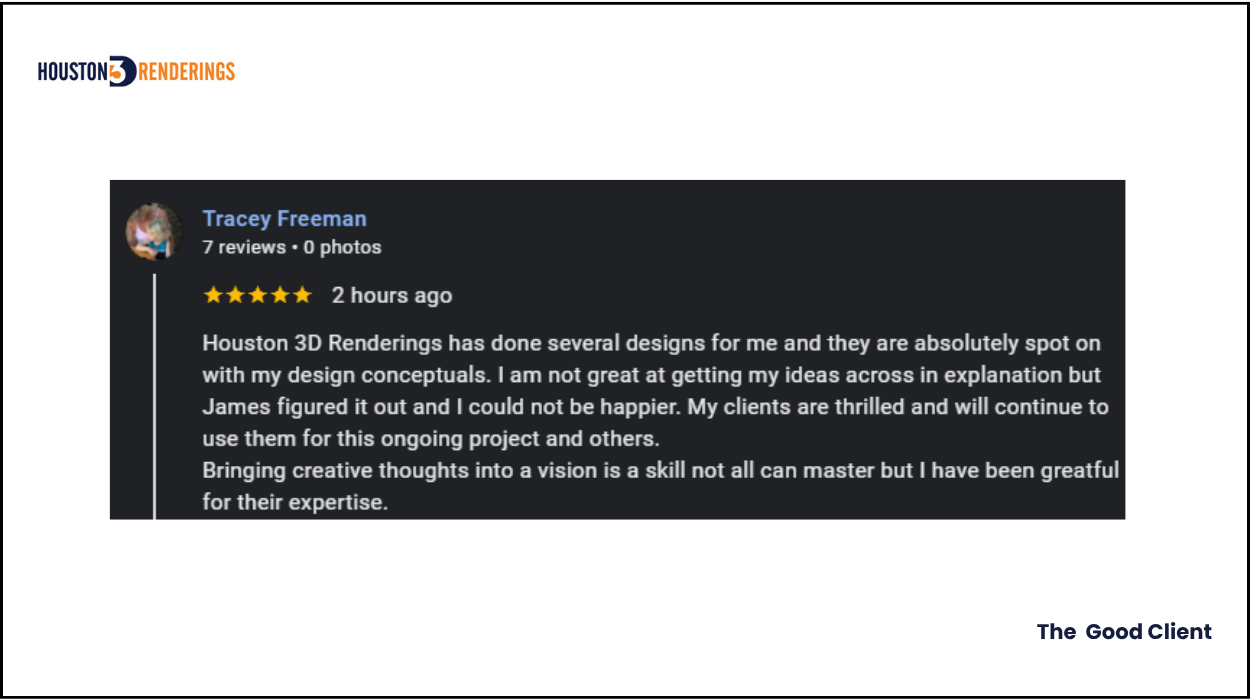
So where does visualization fit when everything is already going right?
3D renderings help good clients see the full potential of their project before it’s built. They can explore design details more deeply with:
Even the best collaborations benefit from clarity. And visualization ensures that what’s envisioned is exactly what gets delivered.
Tight deadlines and high expectations.
These are the clients who know exactly what they want. They come with high expectations, specific needs, and abstract concepts. Altogether with a tendency to change their minds. Revisions are frequent and pressure at every stage.
Without the right tools, projects like this can quickly become overwhelming.
Instead of going back and forth through drawings and explanations, clear renderings are presented that answer questions before they’re even asked. Changes can be visualized quickly. Decisions happen faster.
Visualization acts as a stabilizer:
What could feel chaotic becomes structured. What could be stressful becomes manageable.
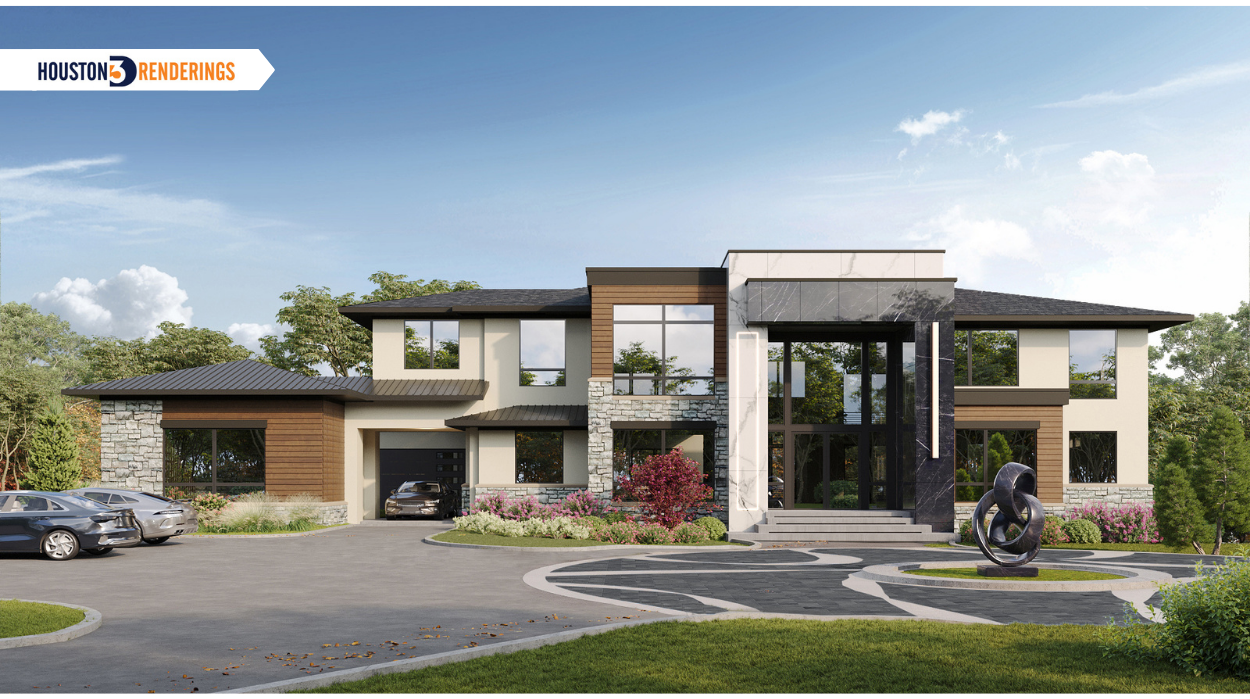
Every personality comes with a different challenge. But they all share one thing: they’re trying to understand a space that doesn’t exist yet. That gap between imagination and reality is where most miscommunication happens. Architectural visualization closes that gap. It turns ideas into images. It replaces uncertainty with clarity. And regardless of a client’s personality, it gives them something concrete to engage with.
At Houston 3D Renderings, with effective visualization we turn abstract concepts into concrete models that identify gaps, open new possibilities, and align teams on a shared vision. Visit www.Houston3DRenderings.com to bring your ideas to life.