March 28, 2026
“We just need one perfect view—no revisions.”
That’s not a casual request.
That’s pressure.
When Xander, an architect working on a new residential design, approached the project, the expectation was clear from day one: deliver a single, high-quality exterior rendering that gets approved instantly. No iterations. No back-and-forth. No second chances.
In a process where multiple revisions are usually expected, this was different.
This was about getting it right the first time.
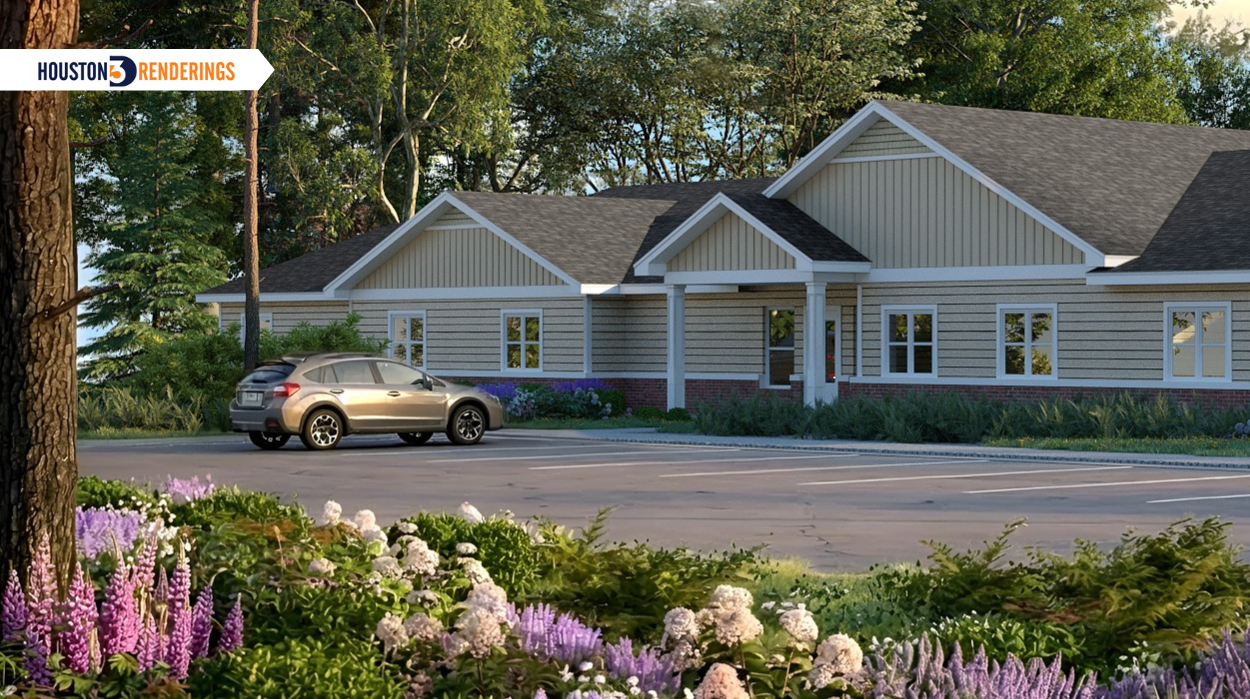
The project didn’t require multiple perspectives or design exploration.
It required precision.
One view.
One angle.
One final image that could communicate everything — materials, proportions, lighting, and overall intent — without explanation.
In today’s residential design landscape, that level of clarity isn’t optional. Clients don’t just want to see drawings; they want to understand how a home will feel before it’s built.
That’s where 3D rendering becomes more than a visual tool.
It becomes a decision-making asset.
Like most residential projects, this one began with 2D drawings. But even the most detailed plans leave room for interpretation — and in this case, there was no margin for error.
The inputs were minimal, but precise:
That was it.
From there, the responsibility shifted to translating these technical references into a fully realized, photorealistic visual — one that could meet expectations on the very first delivery.
At Houston 3D Renderings, this stage is critical. It’s not just about modeling a building. It’s about understanding intent — how materials should read, how proportions should feel, and how the final image should communicate the design without explanation.

With a clear direction in place, the rendering process moved efficiently. The goal was simple: make the design feel real.
The exterior composition was built around carefully selected materials:
But materials alone don’t create realism. Context does.
To support the architecture, the surrounding environment was developed with intention:
Every detail worked together to present the home not as a concept — but as something already built.
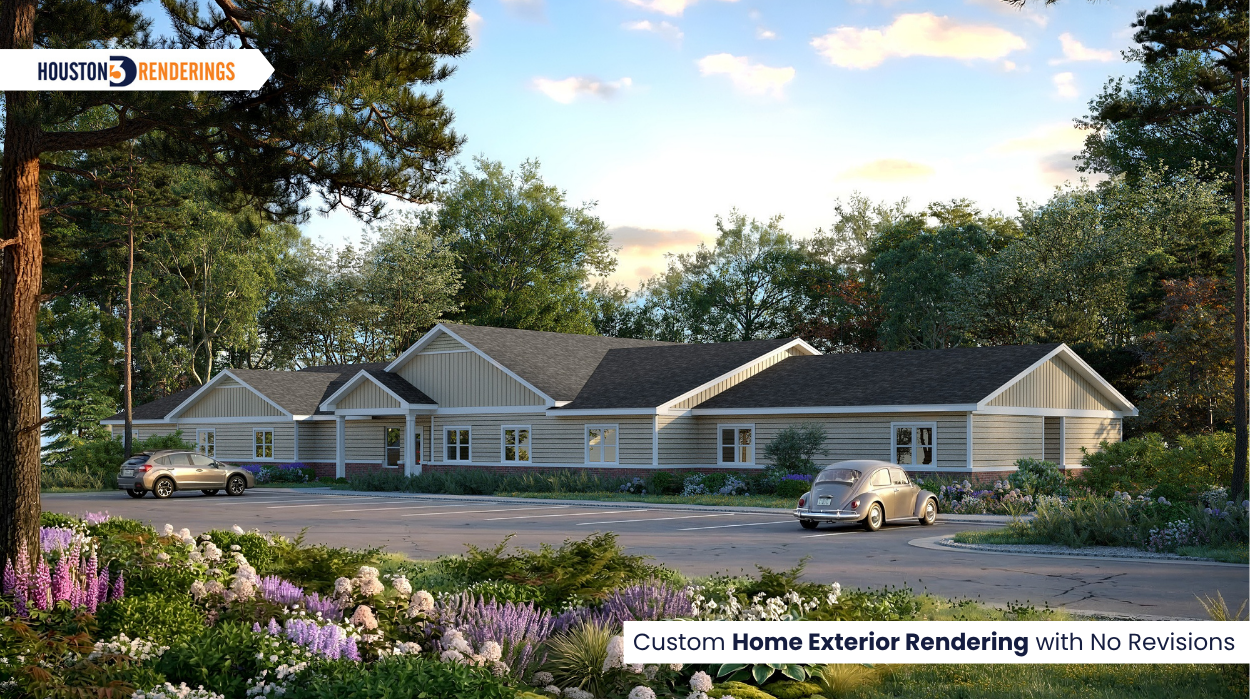
The final rendering was developed based on the exact elevation and specified camera angle provided at the start.
Nothing was left open to interpretation.
Materials and Finishes:
Surrounding Environment:
The result was a single, cohesive image that aligned perfectly with the reference expectations — both technically and visually.
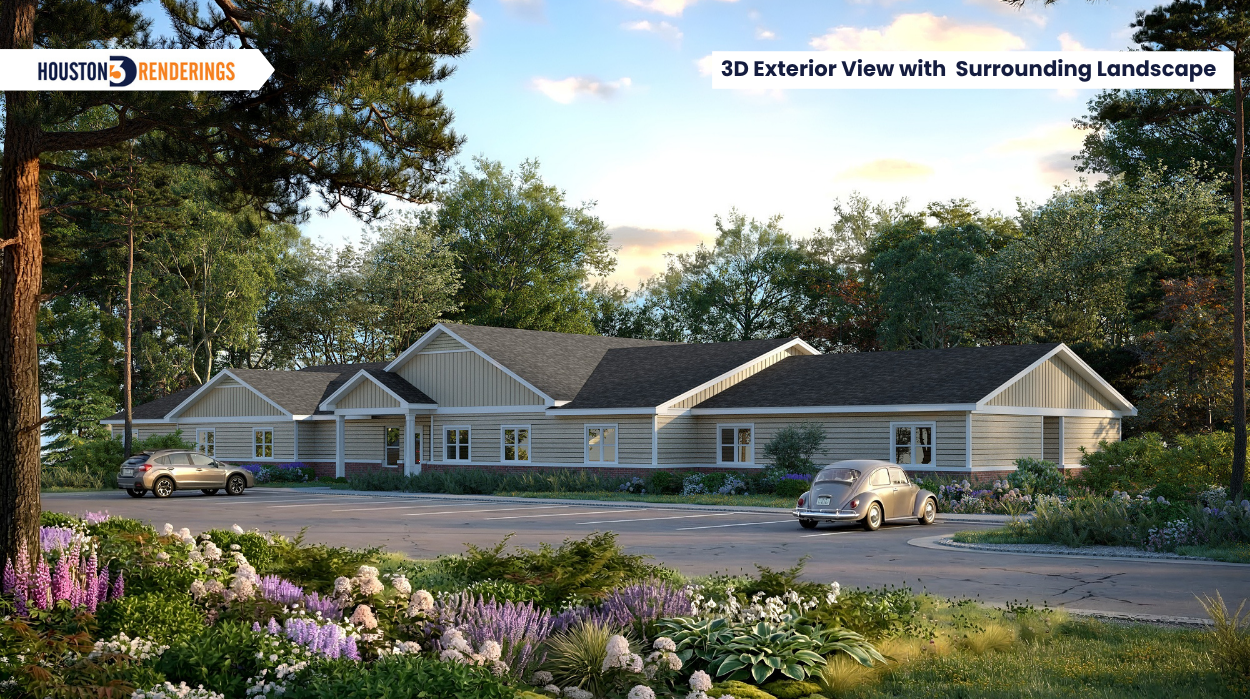
No revisions.
No adjustments.
The first delivery was approved exactly as presented.
For Xander and his colleague Fred, this wasn’t just a successful rendering — it was a confirmation of process. When the vision is clearly defined and executed with precision, the need for iteration disappears.
In most projects, revisions are expected. But they come at a cost — time, communication gaps, and sometimes uncertainty.
A well-executed rendering from the start can:
In this case, one image was enough to move forward with confidence.
Not every project needs multiple options.
Sometimes, it just needs one image — done right.
At Houston 3D Renderings, the focus is on delivering visuals that align from the start, so decisions happen faster and projects move forward without friction.
If you're working on a residential design and need a rendering that communicates clearly from day one, explore more at www.houston3drenderings.com Because when the vision is clear from the beginning, everything that follows becomes easier.