March 19, 2026
In California, land is never just land. It is entitlement, regulation, cost, and opportunity compressed into one limited piece of ground. Before a single shovel touches the soil, a project must survive the scrutiny of planners, stakeholders, and approval boards — all of whom must understand the vision clearly enough to say yes.
For this development project, the challenge was not designing the community. It was proving that the proposal worked — visually, spatially, and contextually — so city approval could move forward without hesitation.
The client approached Houston 3D Renderings with preliminary site plans and early concepts for a modern residential development. The goal was straightforward but critical: produce three high-quality visualizations that would communicate the project convincingly to decision-makers.
Architect Bardy discovered our studio online while searching for high-quality visuals with a fast turnaround. Within 24–48 hours, an initial 3D model was delivered for review. Through a series of focused refinements, the concept evolved into a clear, accurate representation of the proposed community — one that allowed the client to move ahead with confidence.
Every development begins as lines on paper: lot divisions, setbacks, easements, and zoning boundaries. While these documents define what can legally be built, they rarely communicate what the finished environment will actually feel like.
The key question became:
How do you transform a raw site plan into a place people can visualize living in?
Several strategic decisions shaped the outcome:
These choices ensured the visualization reflected not just compliance, but livability.
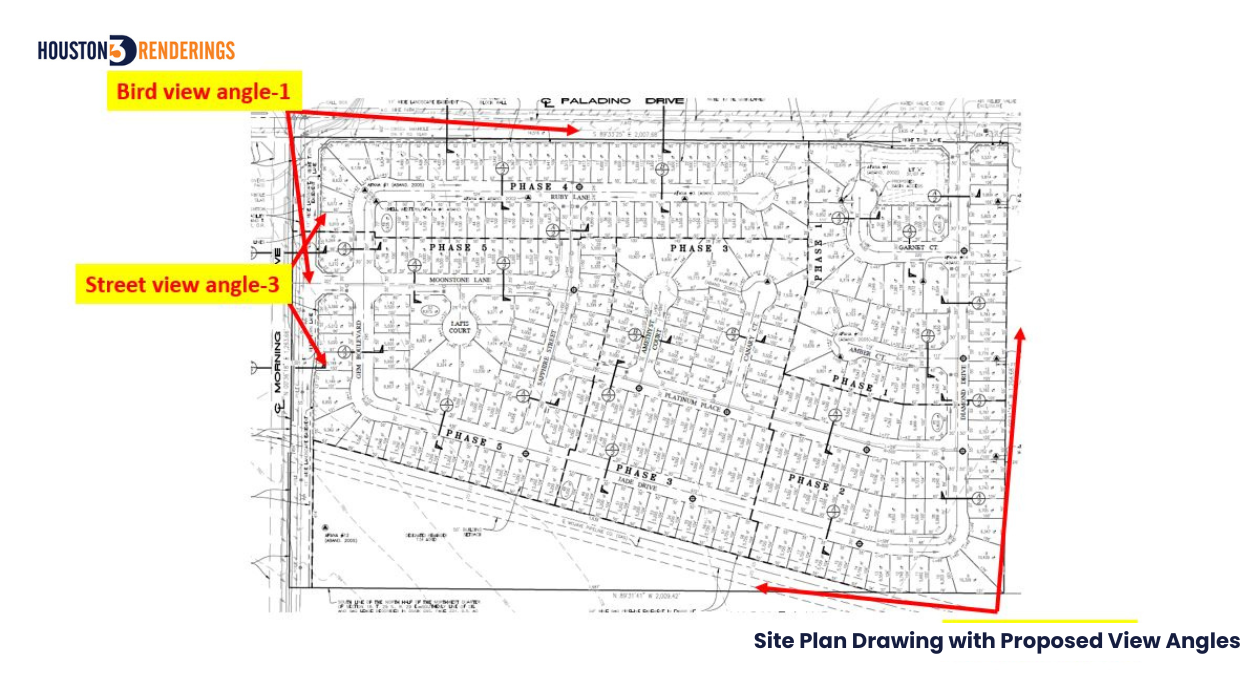
Development visualization is rarely a one-step process. As feedback came in, adjustments were made to align the imagery with both practical requirements and the client’s expectations.
Key refinements included:
Each adjustment moved the project closer to something stakeholders could evaluate as a real place rather than a conceptual layout.
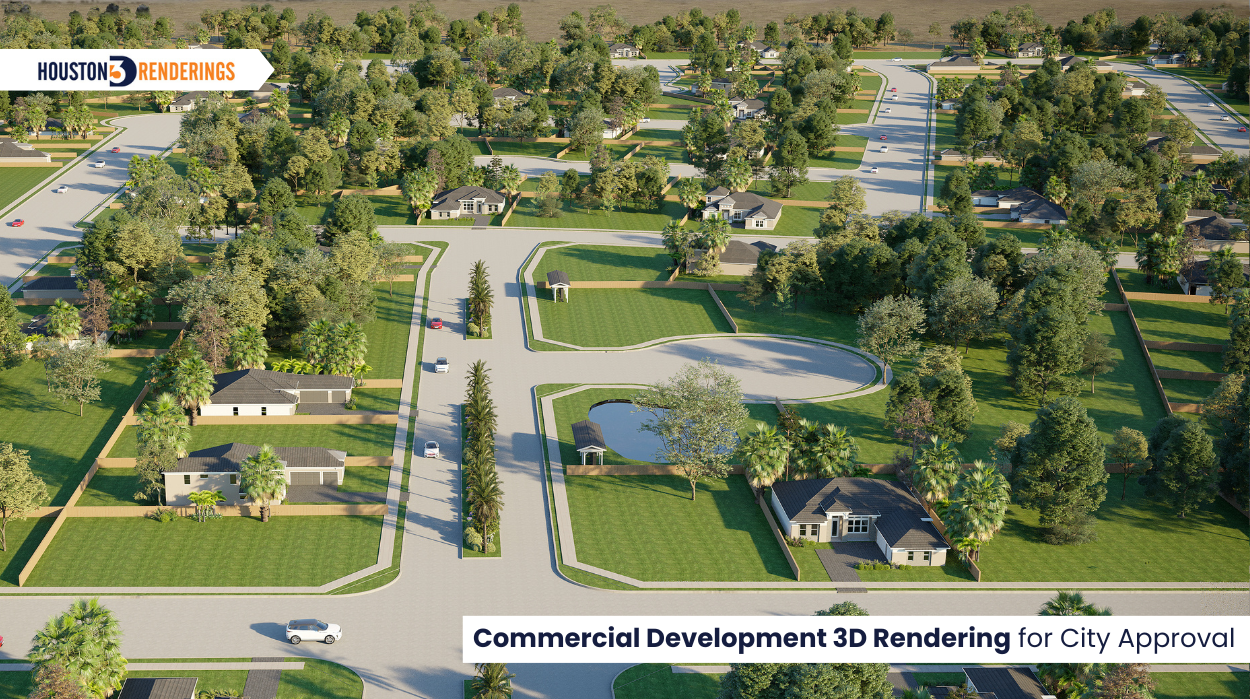
The first visualization focuses on the residential streetscape, showing five contemporary single-family homes arranged along a realistic roadway.
Details such as sidewalks, parked cars, and street trees establish a familiar neighborhood context while highlighting the architectural style of the development.
Key features:
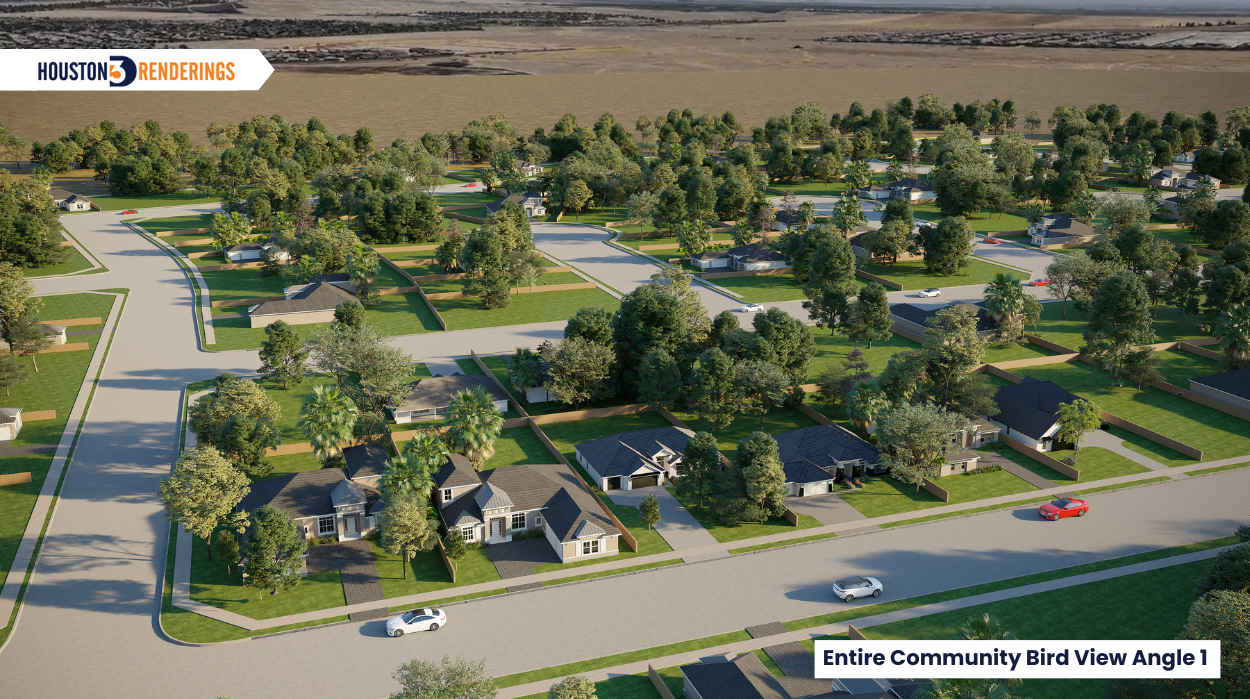
The second view highlights the open areas that define the community’s lifestyle. Parks, water features, and landscaped zones were designed to communicate tranquility and usability rather than decorative excess.
These spaces demonstrate how residents would interact with the environment beyond their homes.
Key features:
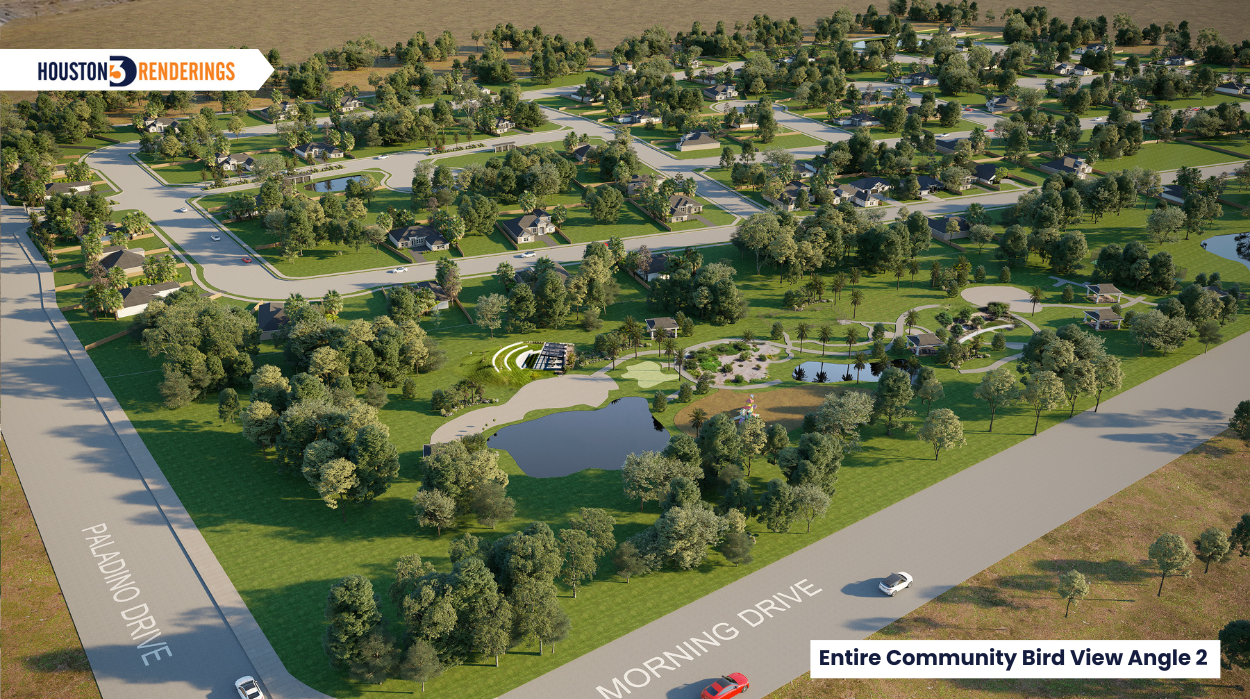
The final visualization captures the arrival experience — often the first impression for both residents and reviewers.
A landscaped gateway framed by trees leads into a central park area featuring open lawns, pathways, and water elements. This composition communicates identity, accessibility, and a community-oriented atmosphere.
Key features:
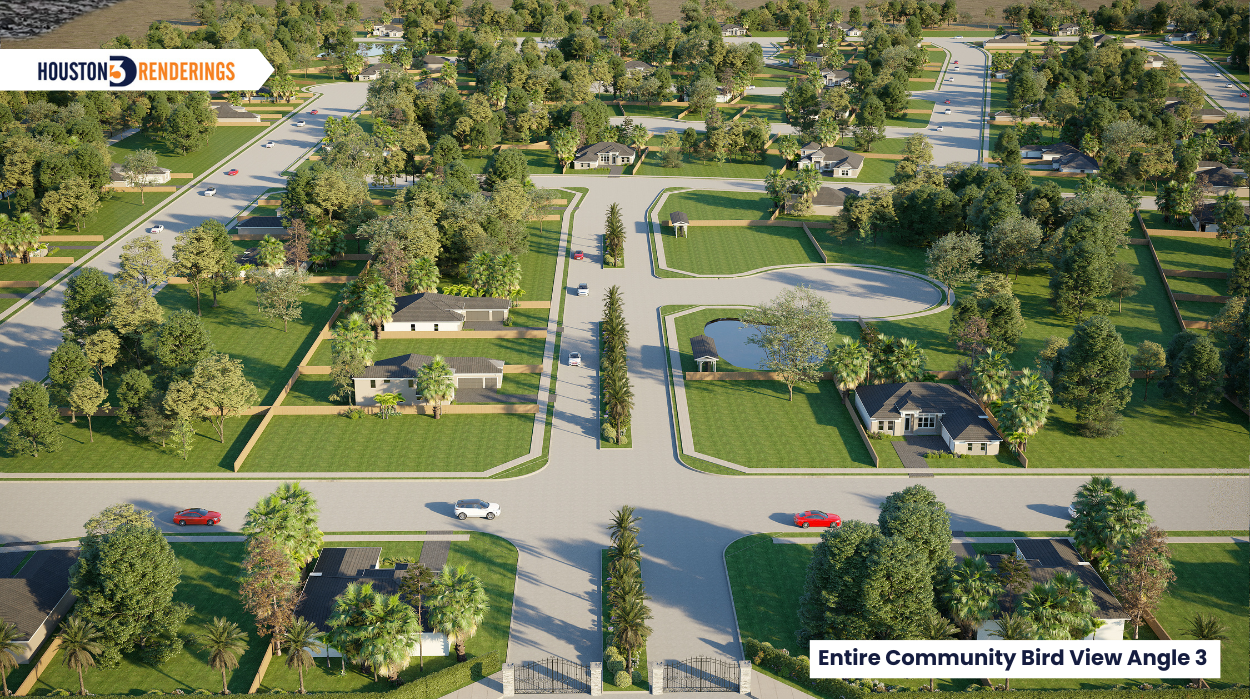
For developers, uncertainty is expensive. Misinterpretation of plans can delay approvals, trigger revisions, or create concerns that might otherwise have been avoided.
High-quality 3D renderings reduce that risk by translating technical information into clear visual evidence of what will be built.
They help stakeholders:
Instead of imagining possibilities, decision-makers can respond to something concrete.
At Houston 3D Renderings, our focus is not just on producing attractive images — it is on creating visuals that support real decisions. For developers navigating approvals, presentations, or investor discussions, clarity can be the difference between momentum and delay.
If you are preparing a commercial or residential development and need visuals that communicate your project with precision and confidence, our team is ready to help. Houston 3D Renderings is an architectural rendering firm specializing in commercial building rendering, office building rendering, and large-scale development visualization. Our visuals are designed to support approvals, presentations, and investment decisions with clarity and confidence.