June 29, 2026
The biggest design mistake often isn't the architecture; it's how it's presented. Whether you're presenting to investors, seeking city approvals, marketing a new development, or helping homeowners choose between design options, one question always comes up:
"What will it actually look like?"
Blueprints answer technical questions. Exterior renderings answer emotional ones.
People don't invest in floor plans. They invest in confidence. They want to understand how materials work together, how sunlight will interact with the façade, whether the landscaping complements the architecture, and how the finished project will feel before a single foundation is poured.
That's why exterior rendering services have become an essential part of modern architecture, construction, and real estate development.
At Houston 3D Renderings, we help architects, builders, developers, designers, and homeowners transform drawings into photorealistic visuals that inspire confidence, accelerate approvals, and make better decisions from day one.
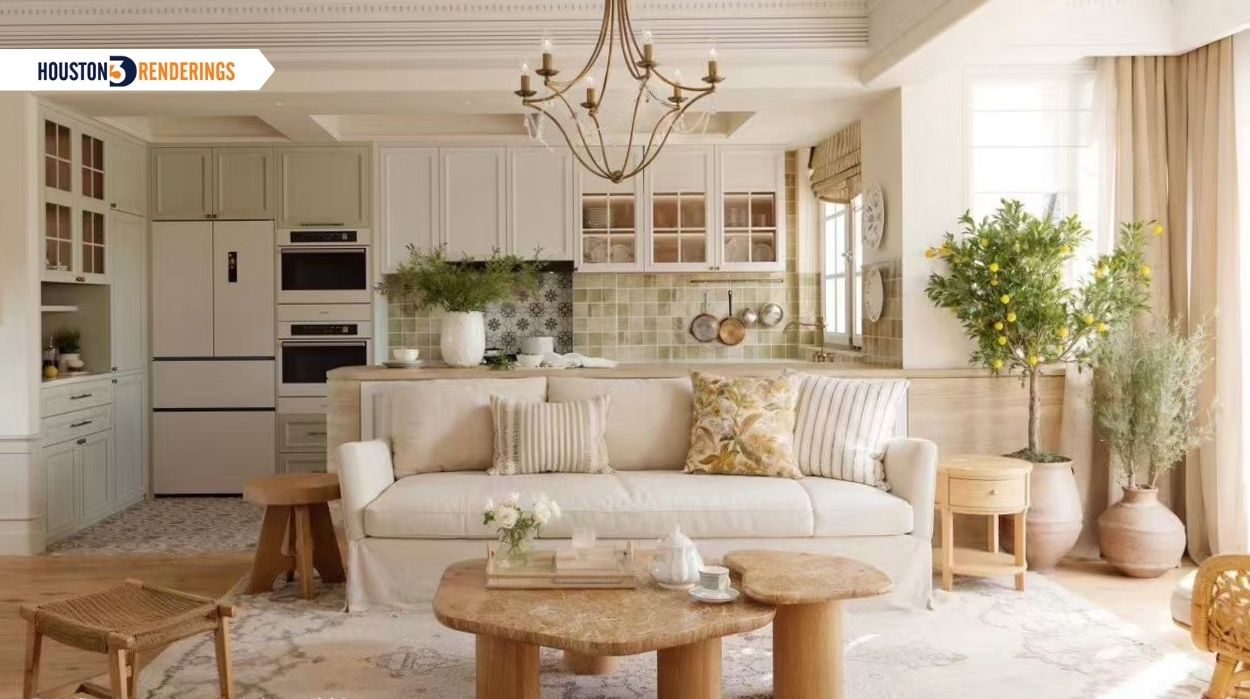
Architectural projects involve dozens of decisions before construction begins. Materials, colors, rooflines, windows, lighting, landscaping, and surrounding context all influence how a project will ultimately be perceived.
While technical drawings communicate dimensions and construction details, they rarely help clients visualize the finished result.
That gap often creates uncertainty.
Clients may ask:
A photorealistic exterior rendering answers those questions instantly.
Instead of imagining the final building, stakeholders experience it as if it already exists.
The result is clearer communication, faster approvals, and fewer costly misunderstandings later in the project.
Many people assume architectural renderings are created simply for presentations. In reality, they're decision-making tools.
Professional architectural visualization services allow teams to evaluate design ideas before construction begins, helping identify opportunities for improvement while changes are still inexpensive to make.
Exterior renderings help:
When everyone shares the same visual understanding, projects move forward more efficiently.
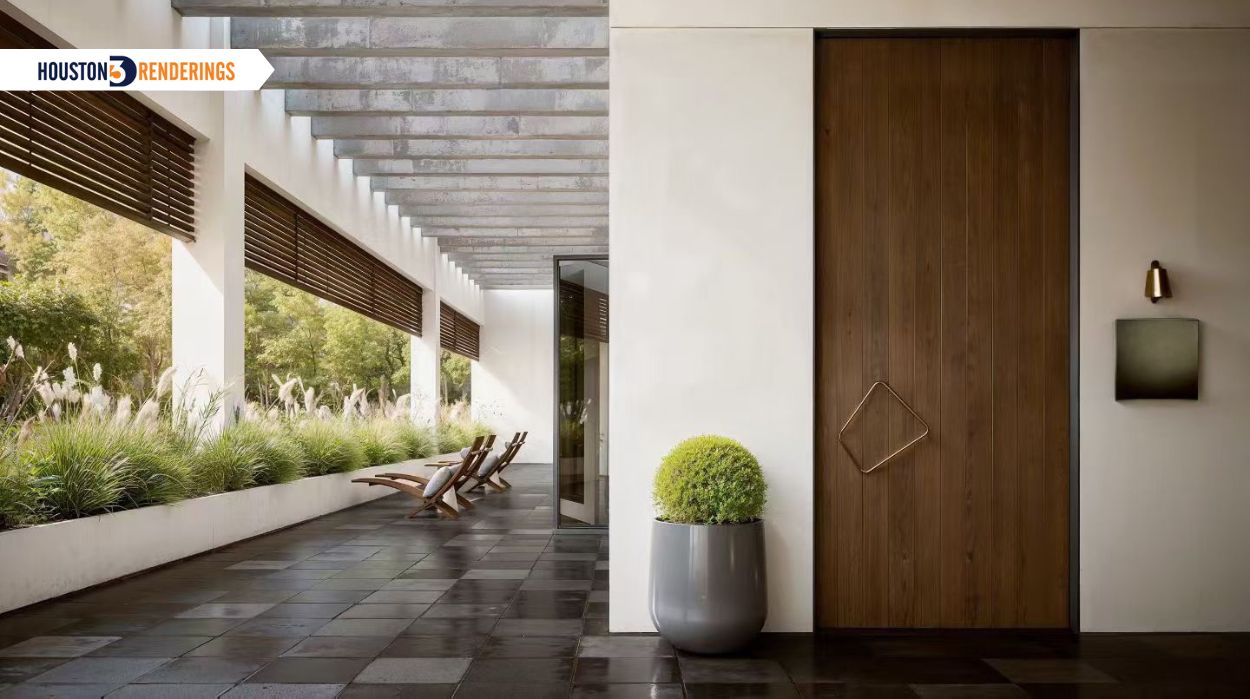
Every project has different goals, which is why different visualization formats exist.
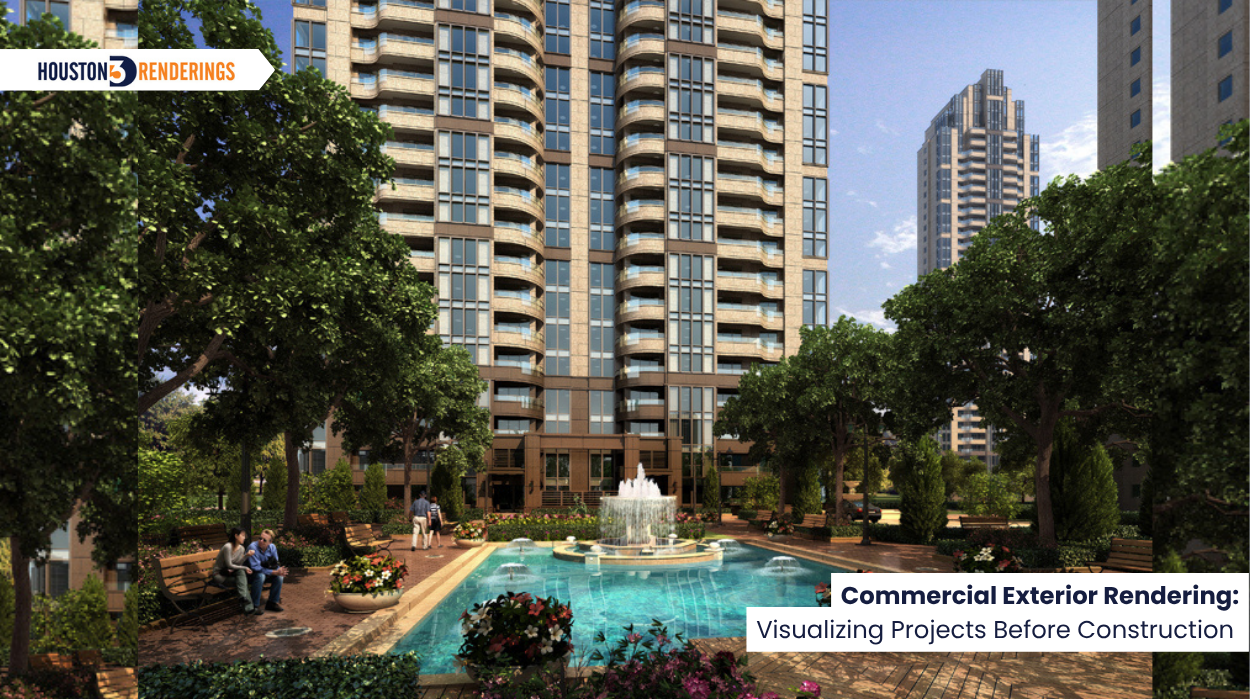
Still images remain the most popular form of 3D architectural rendering because they communicate architectural details with exceptional realism.
They're ideal for:
High-quality still renderings showcase materials, lighting, landscaping, and architectural details exactly as they are intended to appear after construction.
Some projects require more than a single image. Animation allows viewers to move through a development, experiencing how the building interacts with its surroundings from multiple perspectives.
Architects and developers often use animations during investor presentations, public consultations, and promotional campaigns where creating an emotional connection is essential.
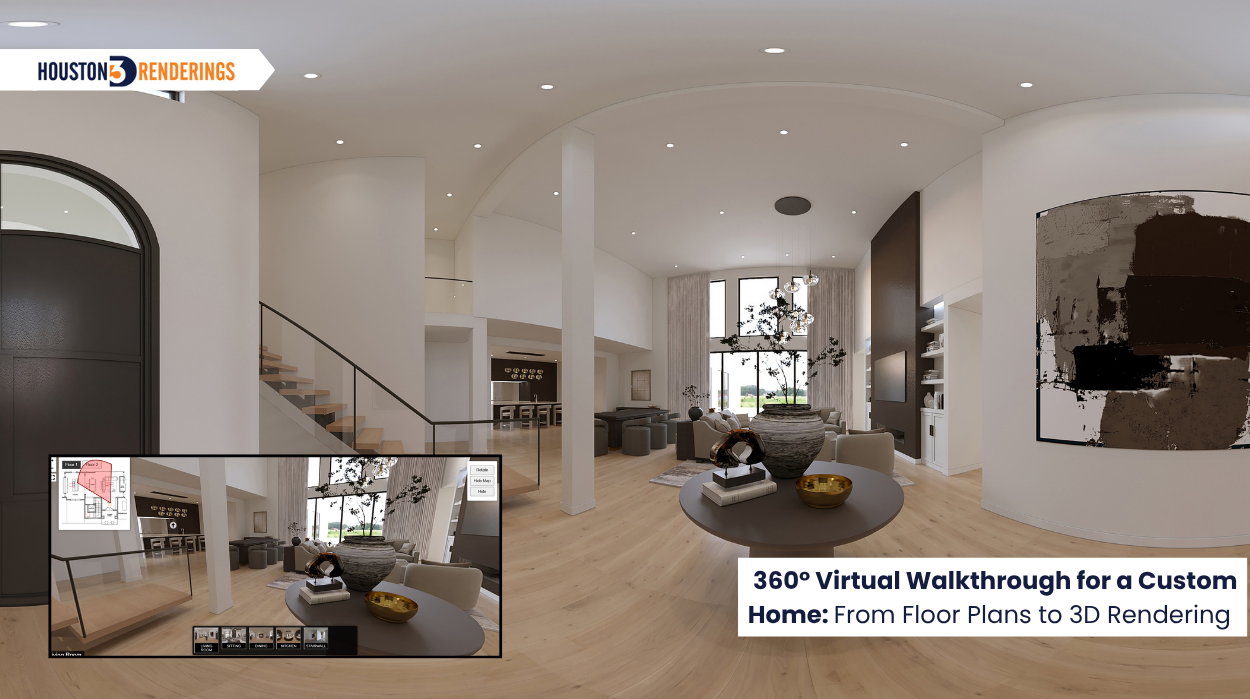
Interactive 360-degree renderings allow viewers to explore a building from every angle. Instead of looking at one fixed perspective, clients can rotate around the design and better understand proportions, massing, and exterior relationships.
These interactive experiences are particularly valuable for larger developments and commercial projects.
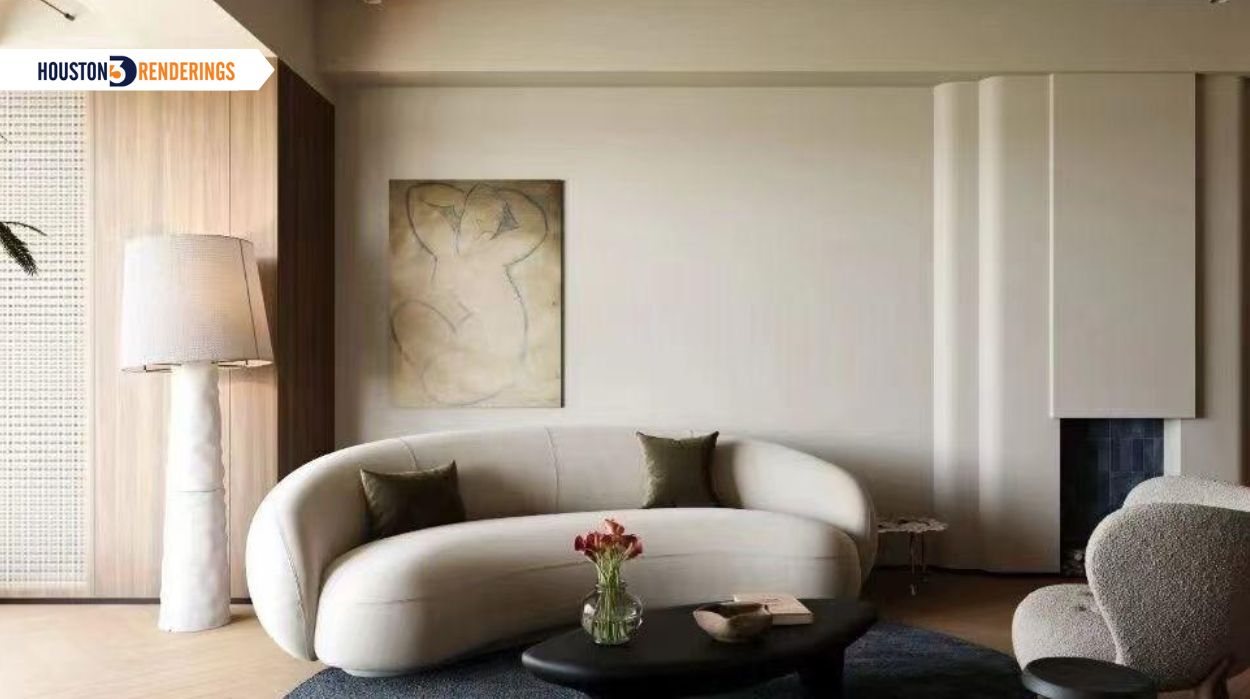
Creating a convincing rendering goes far beyond modeling walls and roofs.
Every successful visualization depends on dozens of carefully balanced elements.
Brick, concrete, stone, glass, timber, metal, and stucco must all behave naturally under changing light conditions. Realistic material textures immediately increase credibility.
Lighting defines atmosphere. Morning sunlight creates a completely different impression than evening illumination.
Professional rendering artists carefully position natural and artificial lighting to enhance the architecture while maintaining realism.
Trees, planting, pathways, outdoor furniture, and surrounding vegetation help transform an empty site into a believable environment. Landscaping should complement the architecture; not compete with it.
Buildings never exist in isolation. Roads, neighboring structures, vehicles, pedestrians, and environmental surroundings provide scale and help viewers understand how the project fits within its location.
Together, these elements create visuals that feel authentic rather than computer-generated.
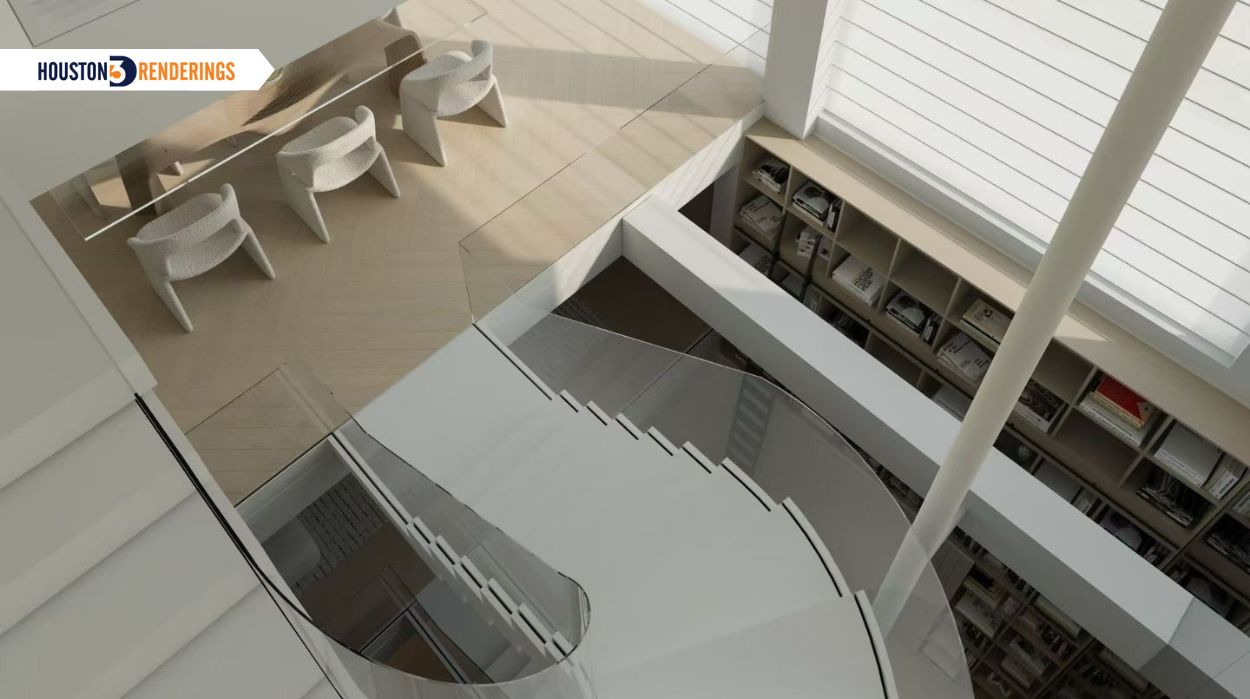
Every project operates within deadlines. Whether preparing for an investor meeting, submitting planning documents, or launching a marketing campaign, delays can slow an entire development.
Our workflow is designed to deliver photorealistic architectural renderings efficiently while maintaining accuracy.
Our process includes:
Throughout the project, communication remains clear and collaborative, ensuring every rendering reflects the original design intent.
A rendering doesn't stop adding value once a design is approved. Many of our clients continue using the same visuals across multiple platforms.
At Houston 3D Renderings, we understand that every project represents far more than a building. It represents an investment, a vision, and countless hours of planning.
Our architectural rendering firm specializes in helping clients communicate those ideas through high-quality architectural visualization services for residential, commercial, hospitality, retail, and mixed-use developments.
By combining photorealistic quality with fast turnaround times and collaborative communication, we help architects, builders, developers, and homeowners move forward with confidence. Because when people can clearly see the future of a project, making decisions becomes much easier.
Explore our portfolio or discuss your next project at www.houston3drenderings.com and see how professional architectural visualization can turn concepts into compelling visual experiences.
Yes. Many clients use renderings during the early design stages to compare concepts, materials, rooflines, and layouts before making final decisions.
Absolutely. High-quality renderings are widely used for real estate marketing, investor presentations, brochures, websites, and social media campaigns before construction begins.
Modern rendering technology can accurately represent materials, lighting, landscaping, shadows, weather conditions, and surrounding environments to create highly photorealistic results.
Yes. Whether it's a custom home, renovation, tiny house, commercial development, or mixed-use project, exterior rendering can help visualize the result before construction begins.