June 20, 2026
Most people think walls define a home. Architects know It's the Roof. Every architectural project reaches a point where imagination alone stops being enough.
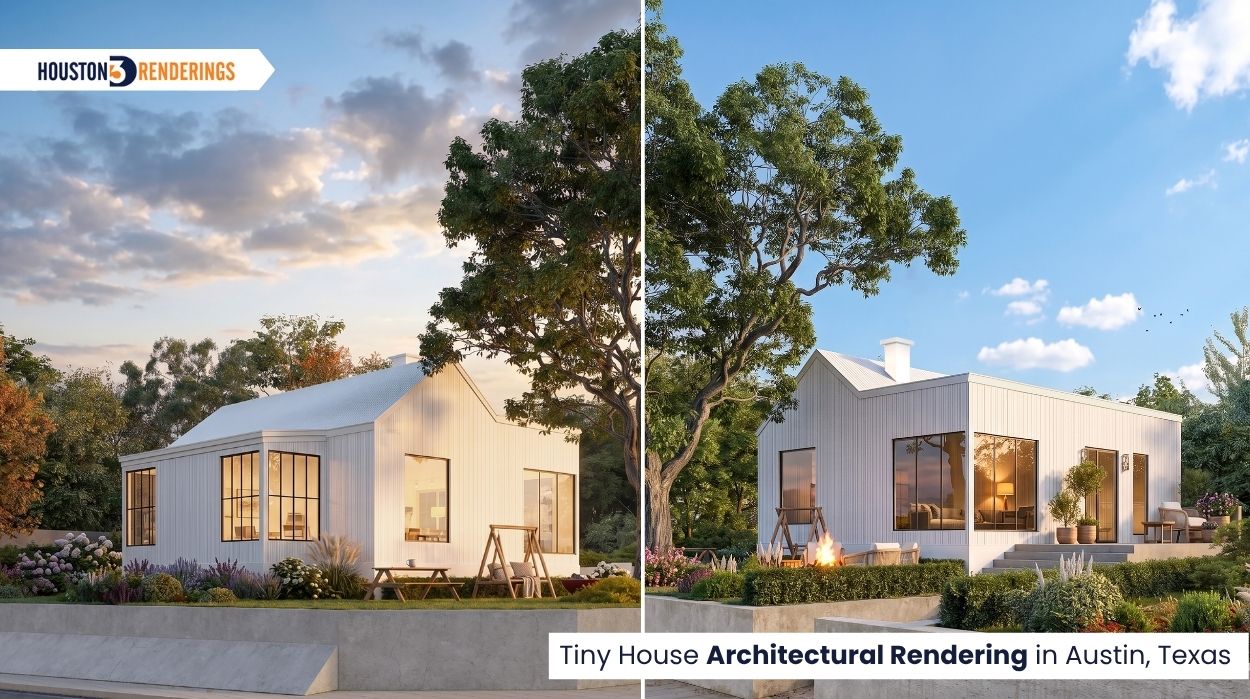
For Christina, an architect based in Austin, Texas, that moment arrived while designing an 880-square-foot tiny house. The layout was already defined, the concept felt right, and the project was moving forward smoothly.
There was just one problem. Two rooflines. And both seemed equally promising.
On paper, each option worked. The sketches made sense. The proportions looked right. But roof forms have a way of changing an entire house. A few inches of height, a different slope, or a shift in massing can completely alter how a home feels.
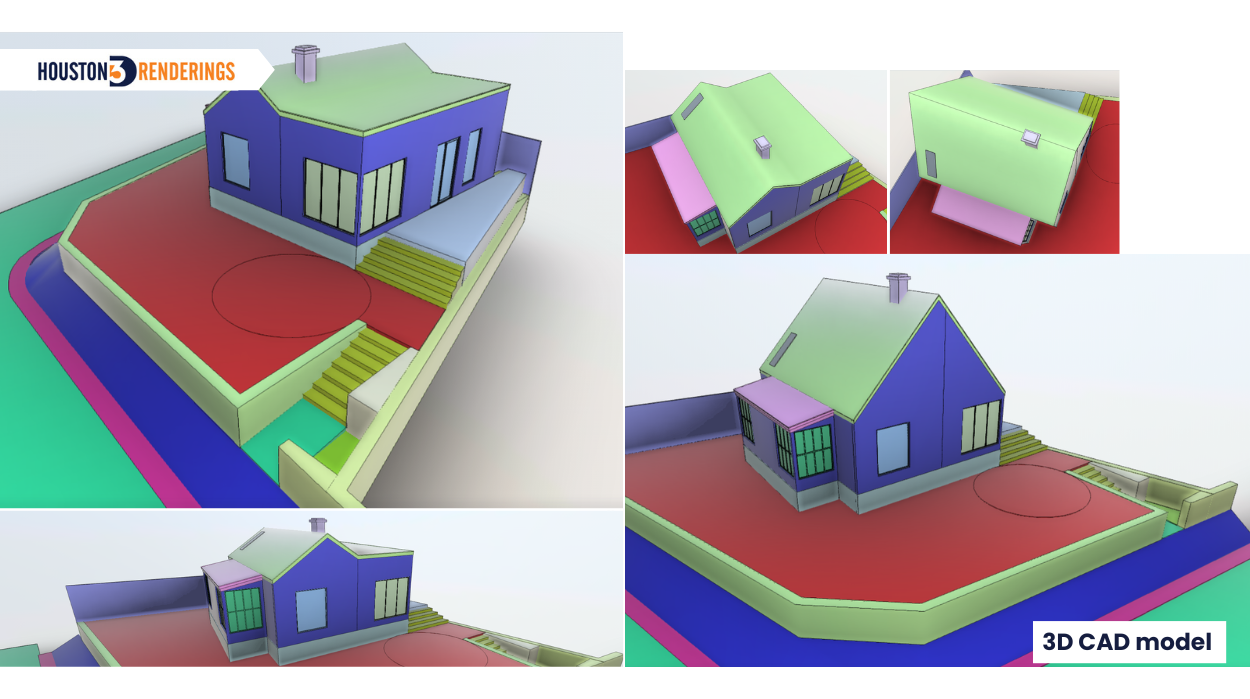
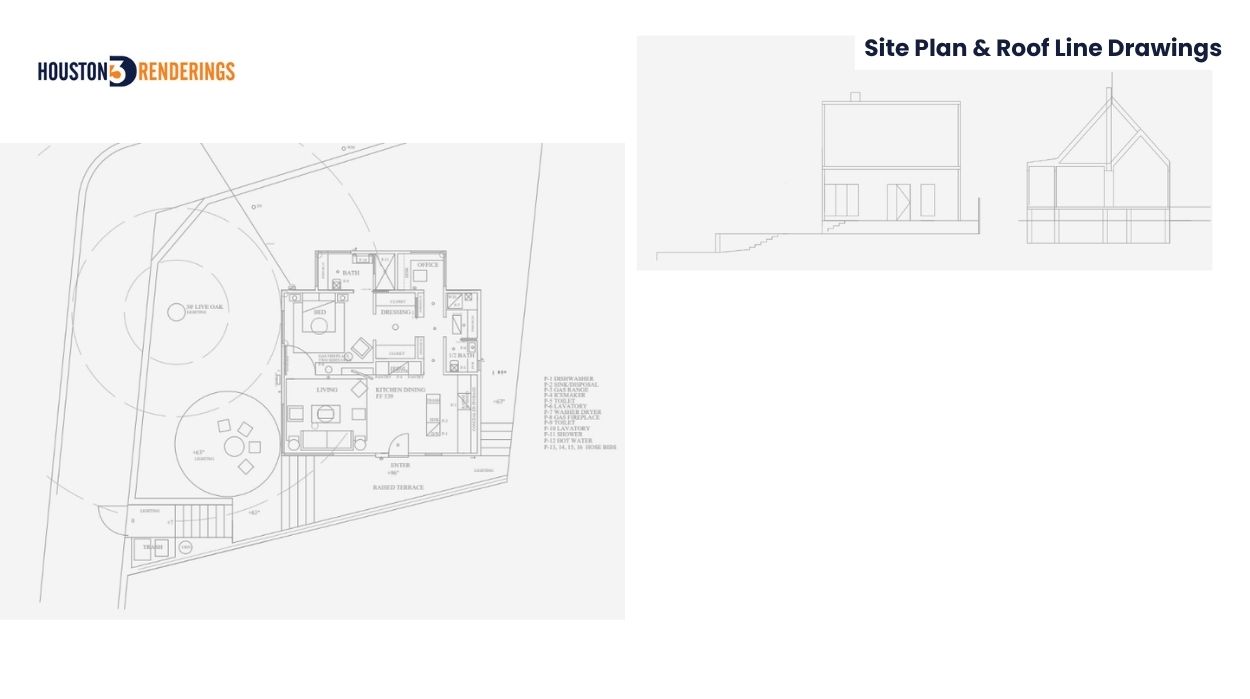
Instead of guessing, Christina wanted to see both concepts before committing to one. We started with roofline sketches, floor plans, site photographs, and inspiration images, she turned to www.Houston3DRenderings.com to the ideas into something tangible.
The project began with a collection of information:
Although the inputs were simple, the goal was precise.
Create two separate roofline concepts and visualize them in a realistic setting, allowing the architect to evaluate each direction before moving deeper into the design process.
Deliverables included:
Rather than simply creating images, the objective was to build a design tool—one that would make decision-making easier.
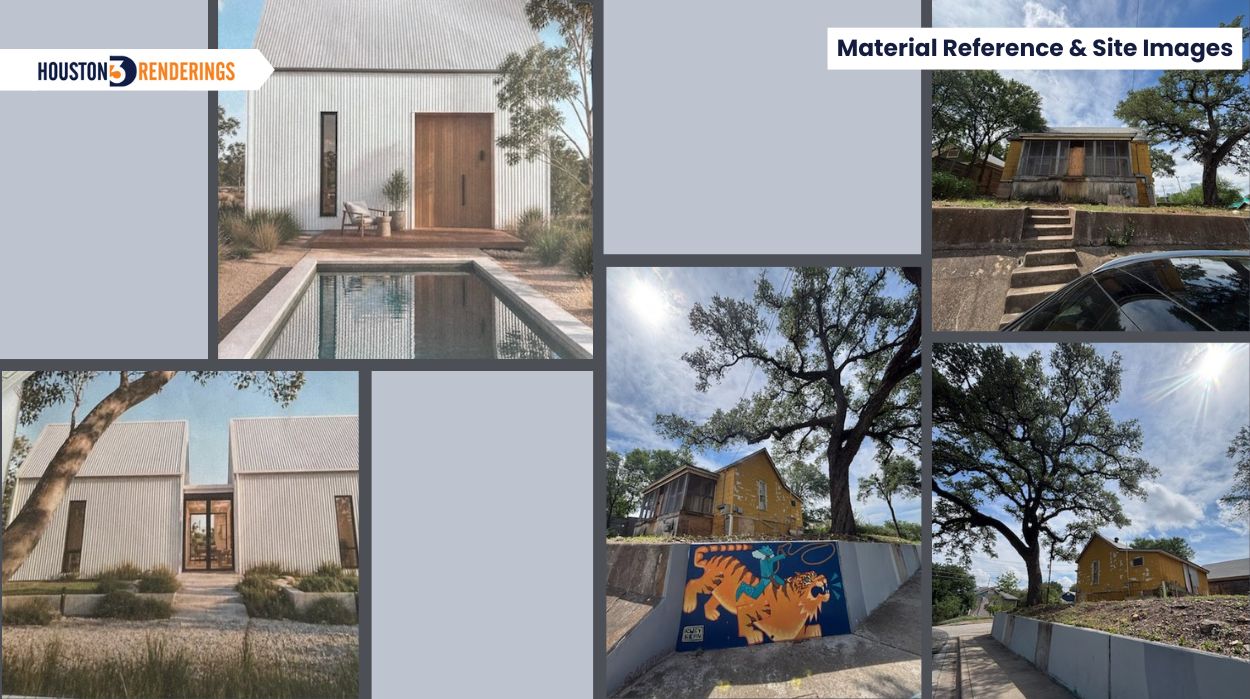
Because the purpose of the project was to study the roof forms, the materials were intentionally selected to support the architecture rather than overpower it.
The design language balanced warmth and simplicity, creating a modern rural aesthetic that felt connected to the existing site.
Key exterior materials included:
Using the same material palette for both options ensured that the rooflines—not changing finishes—became the focus of comparison.
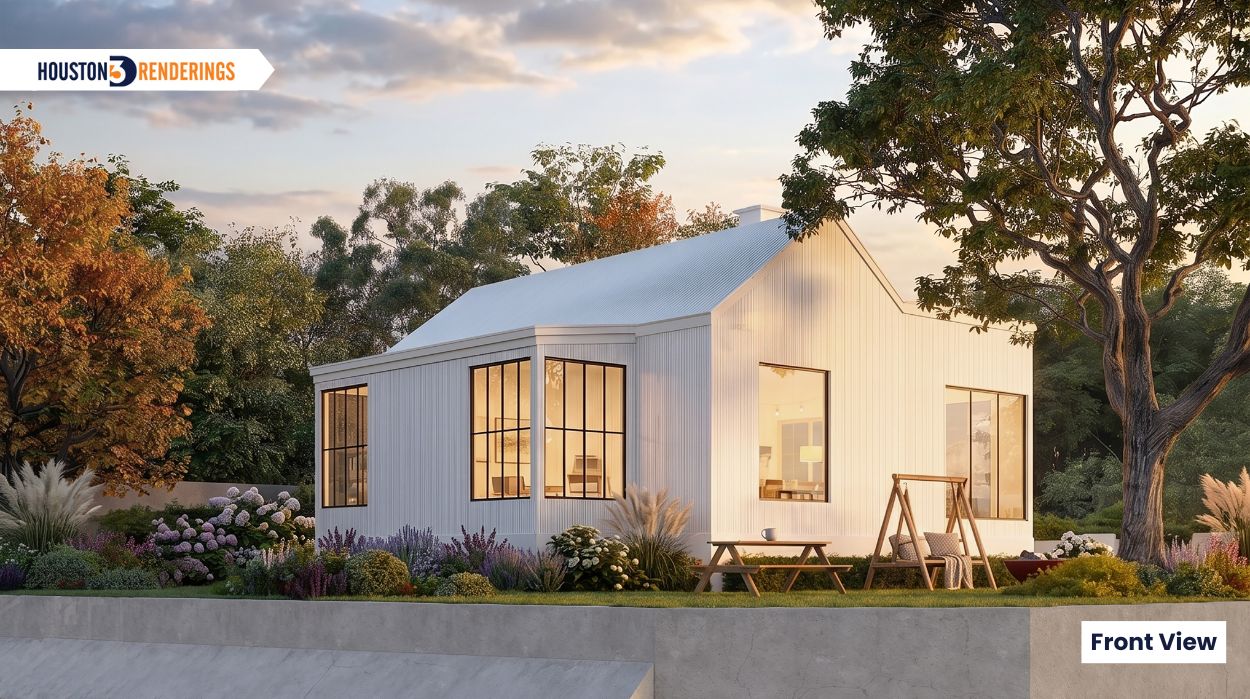
The front renderings focused on something drawings struggle to communicate: Character.
Inspired by the provided references, each option combined vertical metal cladding, warm wood details, and clean window compositions to create a contemporary rural appearance.
More importantly, the renderings allowed the architect to compare:
What looked similar on paper began to reveal distinct personalities once visualized.
Architecture doesn't exist in isolation. The rear elevation studies focused on how the proposed home would sit within the property itself.
Existing trees, topography, and surrounding context were incorporated to create a realistic environment. These views provided a clearer understanding of:
Seeing the project within its landscape allowed the architect to evaluate each option as a complete experience rather than a standalone object.
"Some of our most successful projects begin with nothing more than sketches and ideas. Our job is to transform those concepts into visuals that help clients design with confidence."
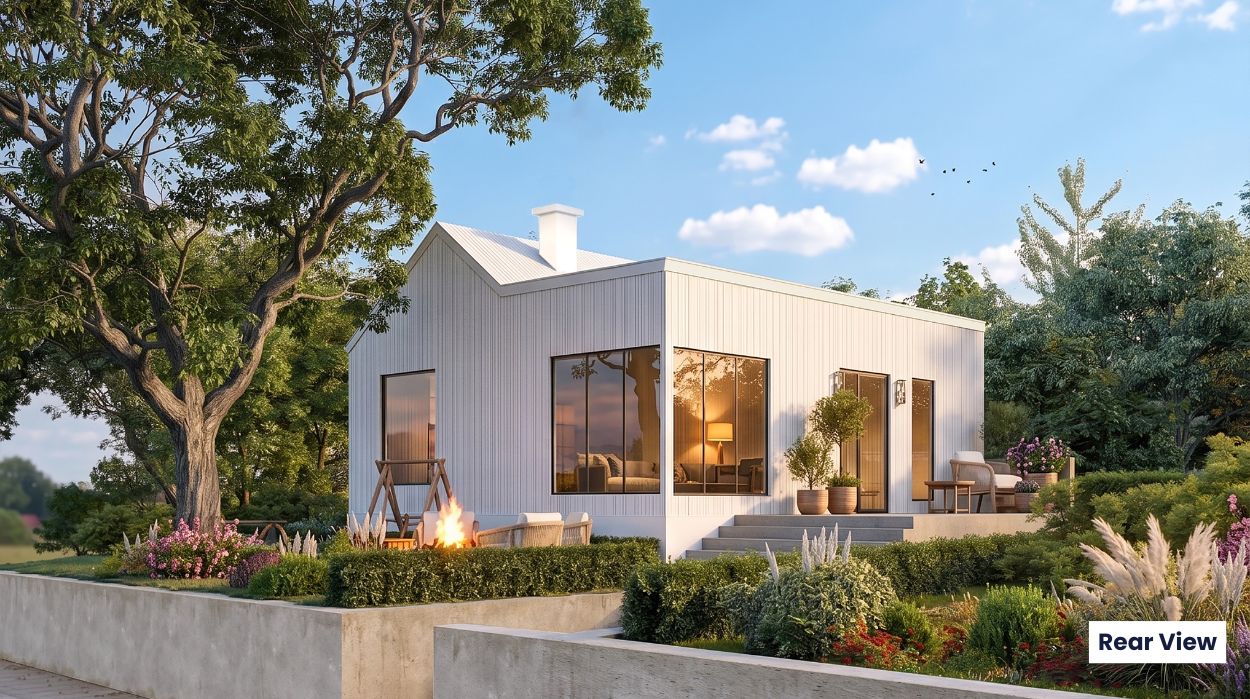
Like most architectural projects, the process didn't end after the first delivery. After reviewing the initial concepts, Christina requested several refinements to further strengthen the design.
Updates included:
These revisions were quickly incorporated into the 3D model, allowing the architect to study the updated design without redrawing the project from scratch.
Some of the biggest design decisions happen long before construction begins.
And surprisingly, they're often not about finishes or materials.
They're about questions like:
Those answers rarely come from sketches alone.
3D visualization allows architects to explore ideas, compare alternatives, and move forward with confidence before committing valuable time and resources. Because sometimes the difference between two rooflines isn't just geometry. It's the character of the entire home.
Whether you're working from rough sketches, floor plans, or multiple design options, Houston 3D Renderings helps architects, homeowners, and builders bring ideas into focus before construction begins.
Because great projects aren't built on assumptions. They're built on clarity. Explore more at www.Houston3DRenderings.com