January 18, 2026
Most remodels don’t go over budget because of labor. They go over budget because someone said, “We’ll figure it out once it’s built.”
In today’s residential projects, that mindset is costing homeowners time, money, and peace of mind. Driveways that look fine on paper end up awkward in real life. Home additions feel disconnected once they’re built. Materials that “should work together” don’t — once real light hits them. And by the time anyone realizes it, the concrete is already poured. This is the problem 3D renderings are quietly solving — long before construction starts.
For Grady’s home remodeling project, clarity was key: the client wanted to see exactly how a new addition would integrate with the existing house. Meanwhile, Trae, a landscaping company, needed to visualize a redesigned driveway and outdoor space before presenting the concept to the homeowner.
In both cases, www.Houston3DRenderings.com provided realistic, detailed visuals that allowed clients to make confident decisions, align expectations, and move forward with their projects — no assumptions required.
Every successful residential project begins with a vision, whether it’s detailed architectural plans or just a rough idea of what could be. But even the clearest ideas need to be seen to be truly understood. For our two Houston clients, Grady and Trae, visualization was the key to making confident decisions before any work began.
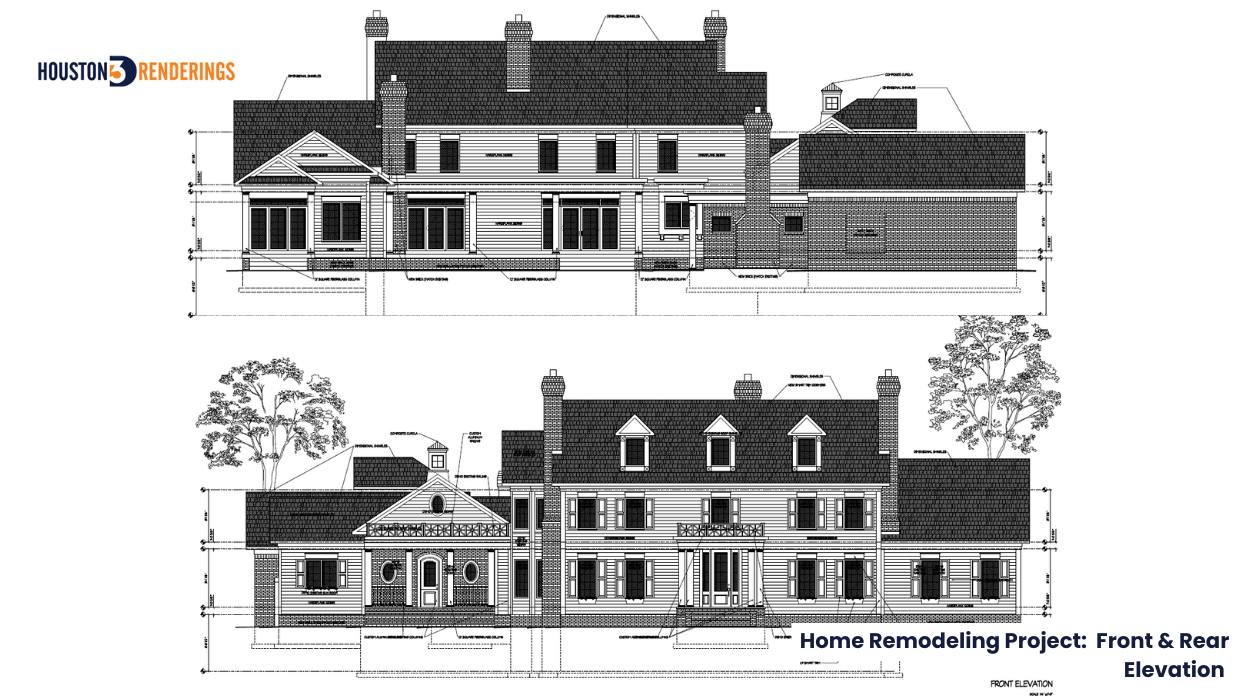
For Grady’s remodeling project, the client wanted to understand exactly how a new addition would integrate with the existing home. The goal was simple: give the homeowner full clarity on the design so every decision — from materials to sightlines — could be made with confidence.
Trae, a landscaping company owner, approached the project with only a property address and a rough idea for a drive-through driveway and outdoor layout. The goal was clear: To see the proposed driveway before built along with background.
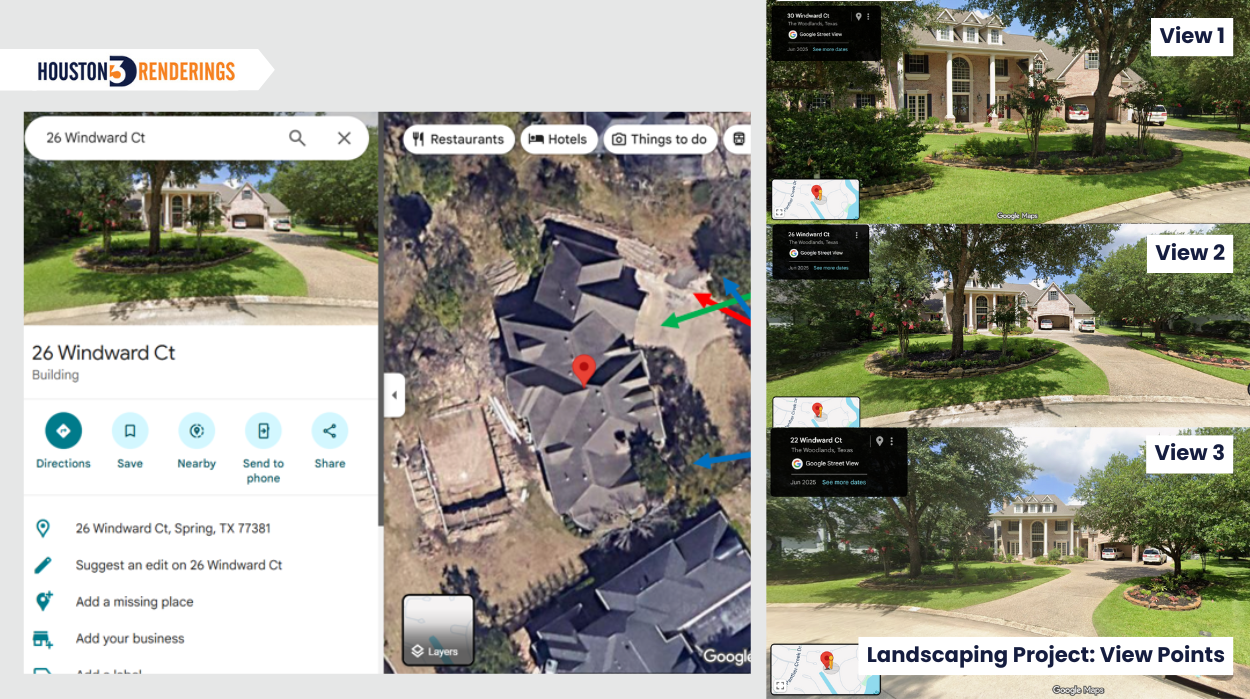
The exterior renderings for these projects focused on realism and context. Whether visualizing a home remodel or a landscaping concept, the goal was to show how materials, surfaces, and site elements appear under natural lighting conditions, not idealized studio settings.
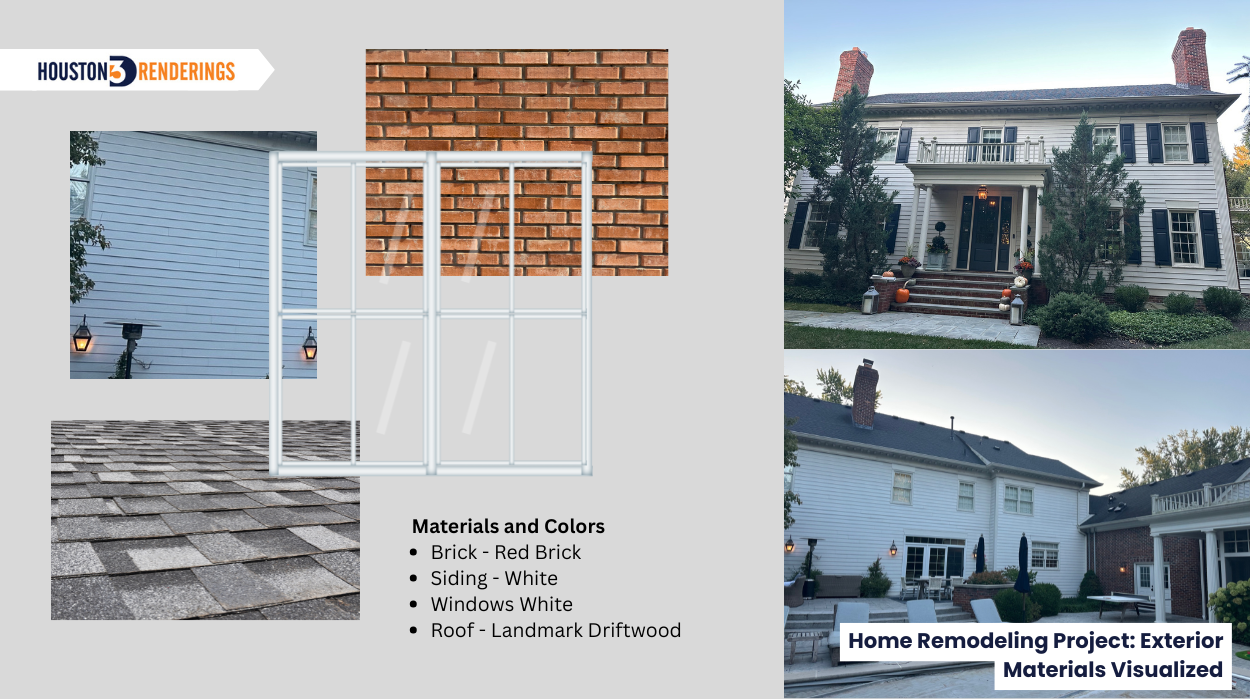
For Grady’s remodeling project, the renderings accurately reflected the existing home’s exterior materials and colors to clearly show how the new addition would integrate with the original structure.
Key elements visualized included:
For Trae’s landscaping project, attention was placed on modeling the existing house and surroundings so the proposed driveway and landscape changes could be evaluated realistically.
Key elements visualized included:
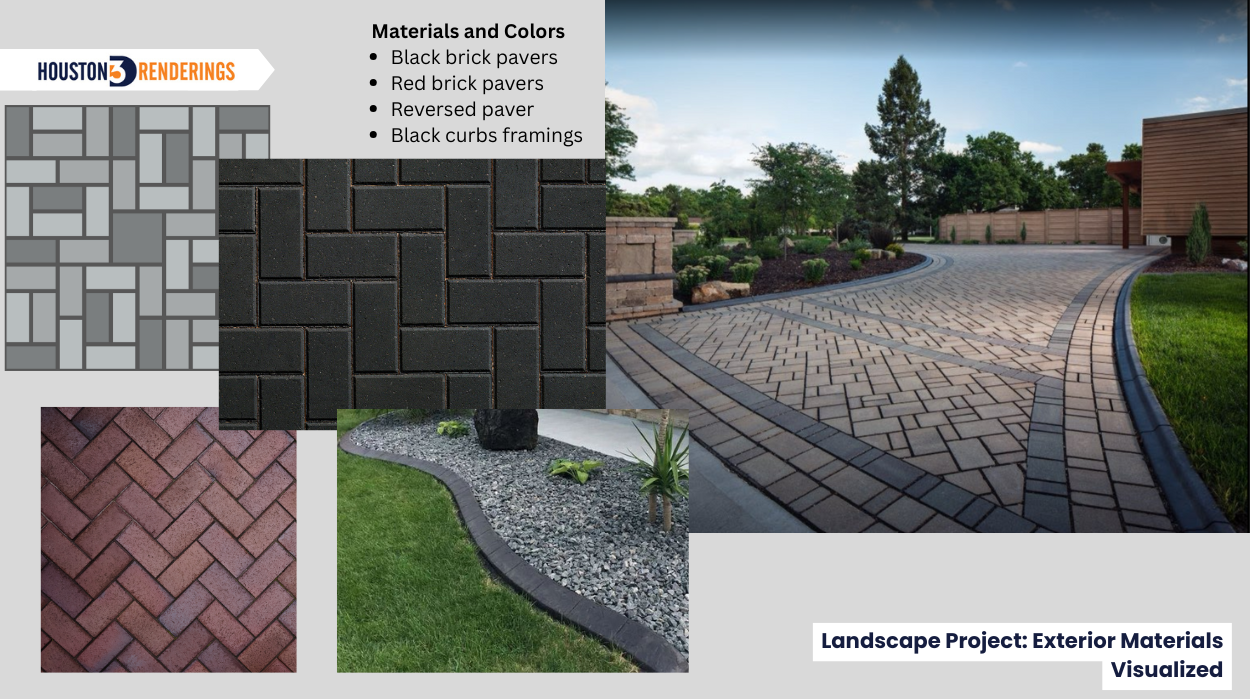
Seeing materials together in their real setting leads to faster, more confident decisions.
For both projects, 3D renderings transformed drawings and early concepts into clear, realistic visuals. These views allowed each client to understand the design intent, evaluate materials and proportions, and move forward with confidence before any work began on site.
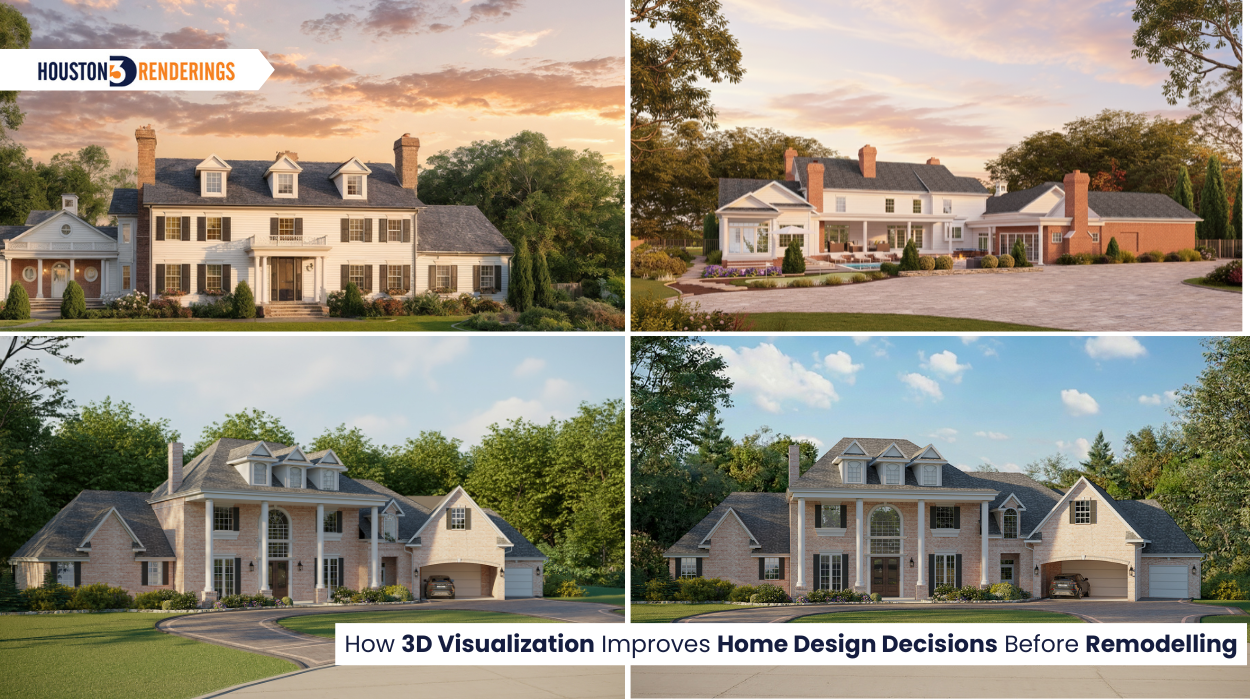
The front elevation rendering focused on how the new addition integrates with the existing home. Materials, colors, and proportions were carefully visualized to ensure the addition felt cohesive and intentional, rather than separate from the original structure.
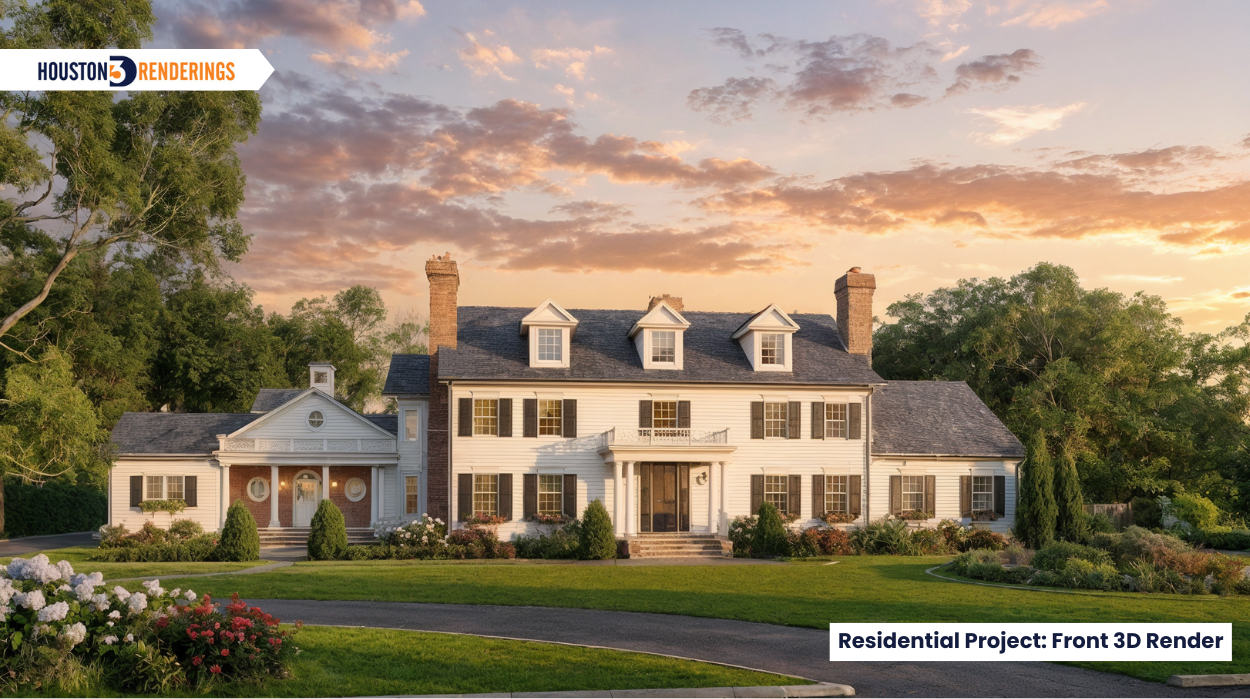
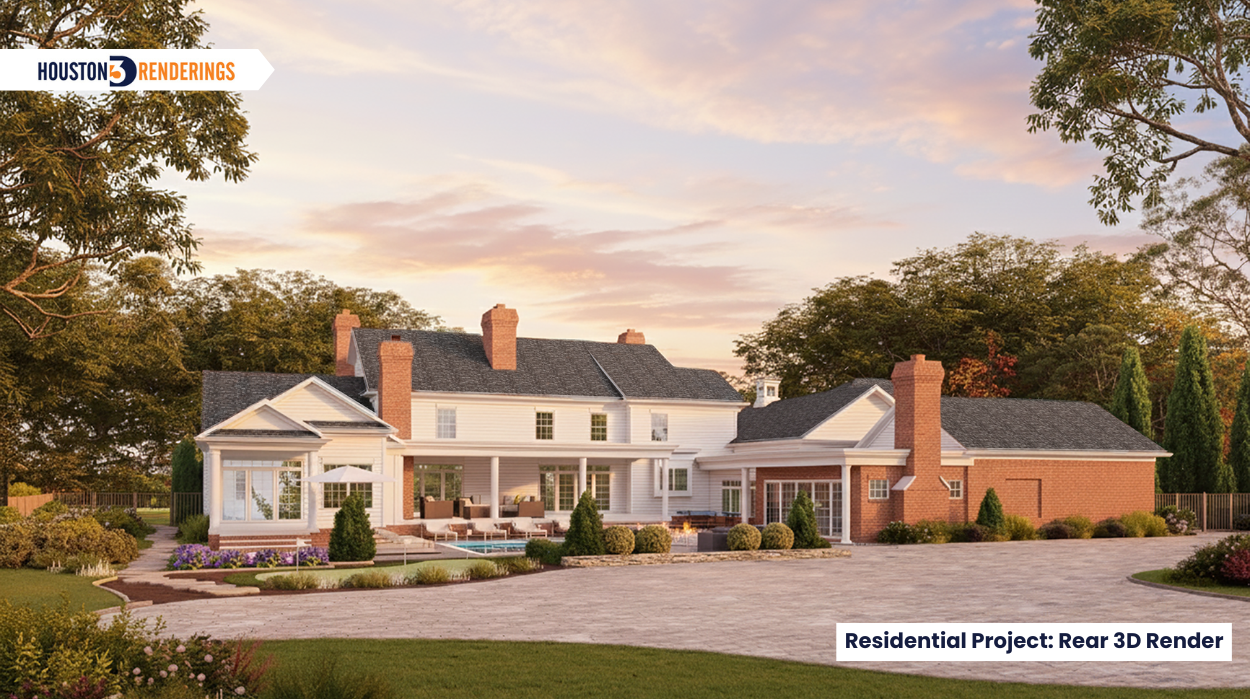
The rear view emphasized sightlines, outdoor connections, and exterior finishes. This perspective helped the client understand how the remodeled home would function from the backyard and how the updated design supported everyday living.
Illustrated the proposed drive-through driveway from the main entry, clearly showing how vehicles would enter and exit the property.
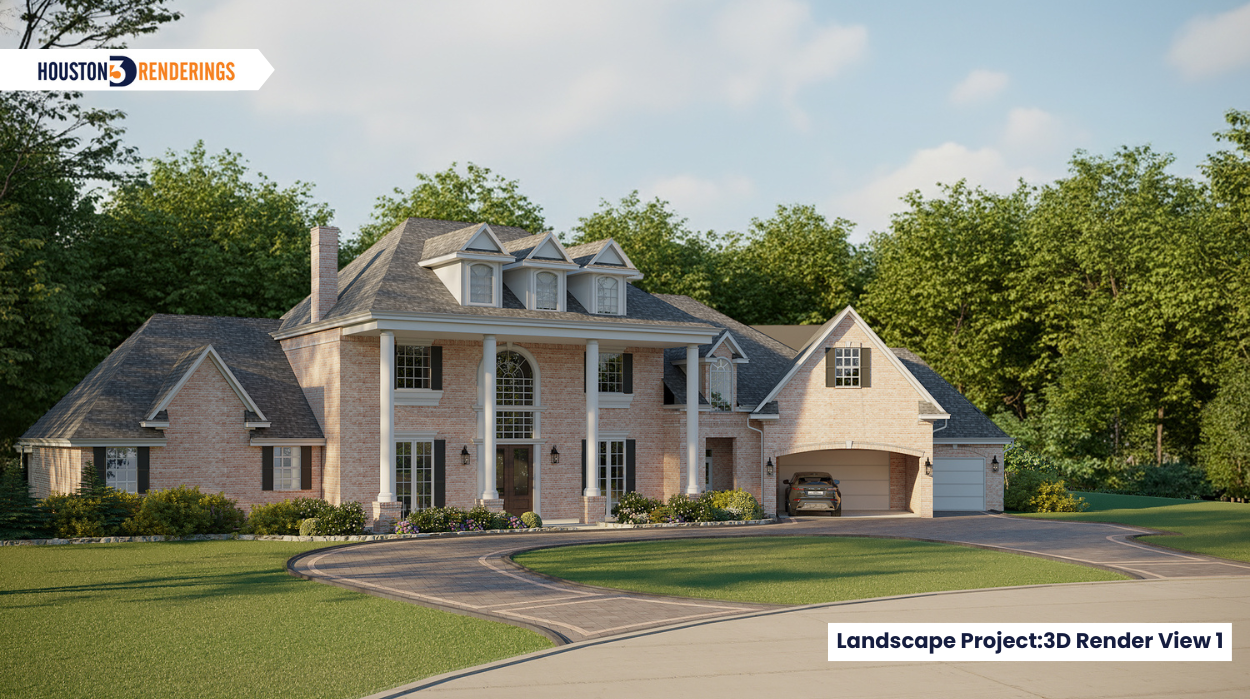
Highlighted circulation flow and landscaping adjustments, including changes made up to the central tree to support the new driveway layout.
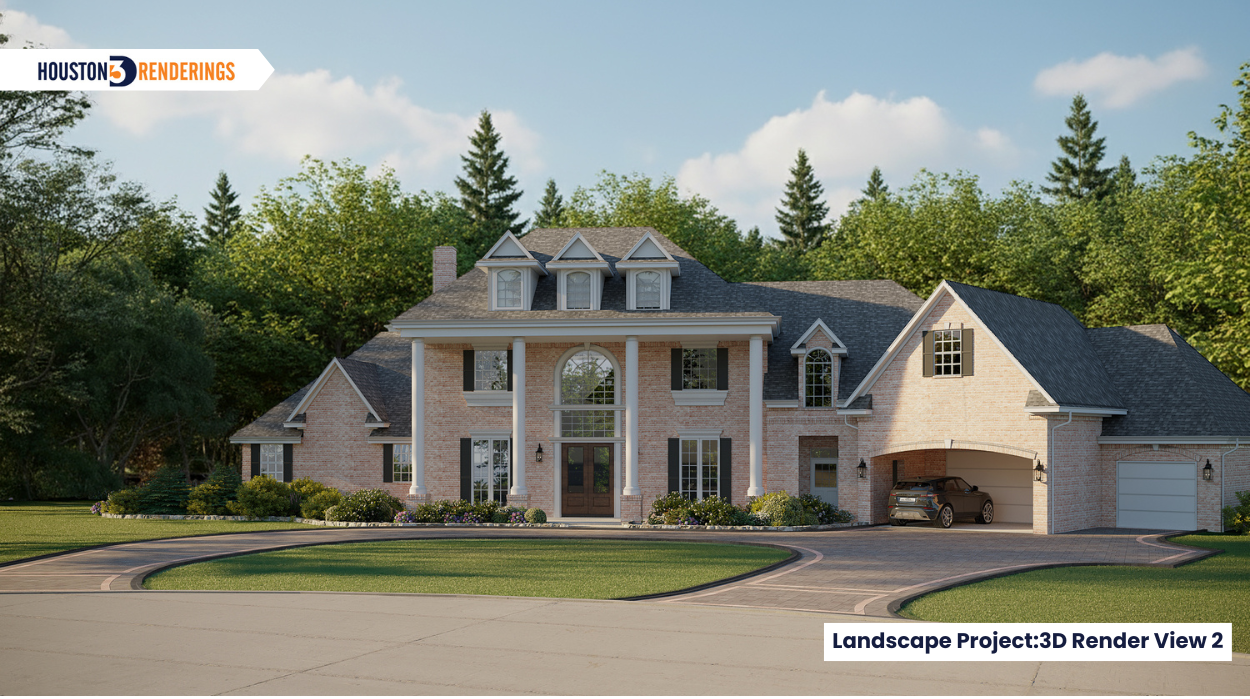
Presented the full site context, combining the existing home, updated lawn and planting areas, and the complete driveway design in a single, cohesive view.
Together, these renderings gave both clients a clear understanding of the final outcome — from materials to layout — helping decisions happen faster and with greater confidence.
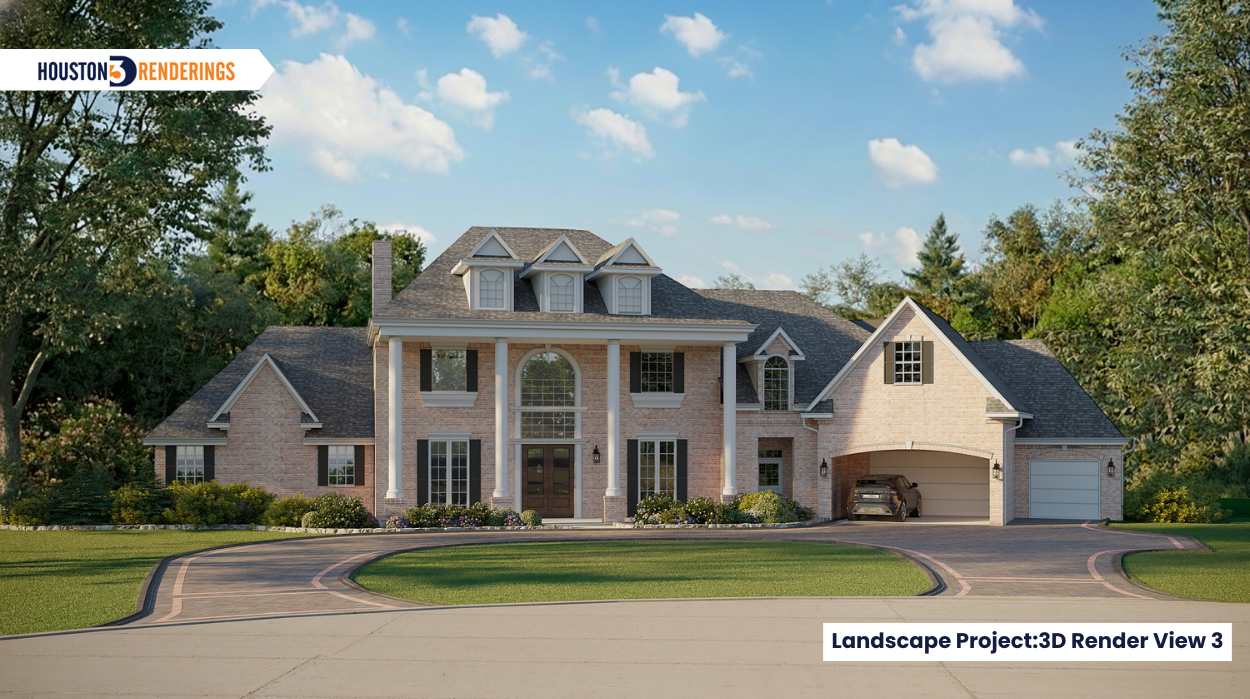
Using plans, reference images, and material selections, the 3D visualization process delivers more than photorealism — it delivers clarity and confidence.
This approach helps:
Each view serves a purpose:
Whether remodeling a home or redesigning a landscape, 3D renderings remove uncertainty. Visualizing the full picture before work begins helps clients make confident decisions and keeps projects on track. At www.Houston3DRenderings.com, we help homeowners, builders, and designers replace assumptions with clarity — so projects don’t just get built, they get built right.